

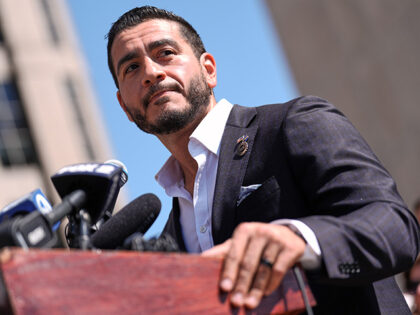
Abdul El-Sayed’s verbal gymnastics on the Second Amendment reveal a candidate who is either unwilling or unable to articulate a coherent vision for the right to keep and bear arms. When pressed on whether he supports replacing the constitutional guarantee, he pivoted to healthcare talking points before offering the narrow concession that “hunting rifles” might remain acceptable. That framing is telling: it treats the Second Amendment not as an individual right rooted in self-defense and resistance to tyranny, but as a narrow sporting privilege subject to political approval. For the 2A community, this is the same rhetorical sleight-of-hand that has preceded magazine bans, “assault weapon” restrictions, and registration schemes in other blue states.
The dodge matters because El-Sayed is not some fringe activist; he is the Democratic nominee for U.S. Senate in Michigan, a state with millions of lawful gun owners and a robust outdoor culture. His reluctance to affirm the Amendment’s text suggests he views it as an obstacle rather than a cornerstone, and his “hunting rifles only” comfort zone aligns with the incremental-disarmament strategy already playing out in states like New York and California. If he reaches the Senate, expect hearings that frame semi-automatic ownership as inherently suspect and funding streams that prioritize buybacks over enforcement of existing law.
For gun owners, the takeaway is straightforward: candidates who cannot plainly defend the Second Amendment’s plain text will interpret every ambiguity as a green light for further restrictions. El-Sayed’s performance is a reminder that elections have consequences for the right to keep and bear arms long before any bill reaches the floor.


