

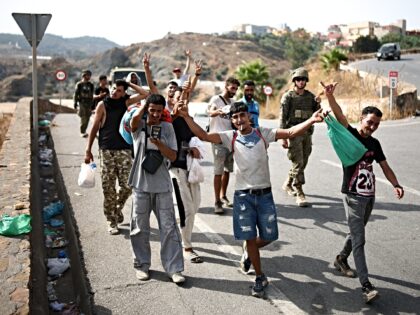
The European Union’s decision to hold an emergency video conference six days after the migrant surge into Ceuta began is less a show of resolve than an admission that Brussels has no real plan for securing its southern frontier. Spain’s tiny North-African enclave has become the latest pressure point in a migration corridor that runs from sub-Saharan Africa through Morocco, and the delay in convening even a virtual meeting underscores how slowly the continent’s political machinery reacts when physical borders are breached. For Americans who value the Second Amendment, the spectacle is instructive: when a nation cannot—or will not—control its perimeter, the resulting disorder quickly erodes the public’s confidence in every other institution, including the right to keep and bear arms.
What makes the Ceuta episode especially relevant to the 2A community is the way European officials frame the crisis as a humanitarian rather than a security issue. By treating the arrival of thousands of migrants as a diplomatic inconvenience rather than a failure of sovereignty, the E.U. reinforces the notion that borders are optional and that private citizens have little role in their own defense. That mindset travels. U.S. cities that have experimented with reduced policing and open-border rhetoric are already reporting spikes in property crime and gang activity; the same political class that dismisses the Ceuta breach as “complex” is quick to label armed self-defense as “vigilantism.” The lesson is straightforward: secure borders and armed citizens are two sides of the same coin—remove one and pressure builds on the other.
Longer term, the Ceuta incident is likely to accelerate Europe’s quiet rearmament of its civilian population. Several E.U. member states have already loosened carry laws or expanded castle-doctrine statutes in response to terror incidents and no-go zones; continued border failures will push that trend further. American gun owners watching the story should recognize the parallel: every time a government proves unable to fulfill its most basic duty—protecting the homeland—citizens inevitably look to the tools and traditions the Second Amendment preserves. In that sense, Ceuta is not merely a European story about migration; it is a reminder that sovereignty, security, and the right to bear arms rise or fall together.


