

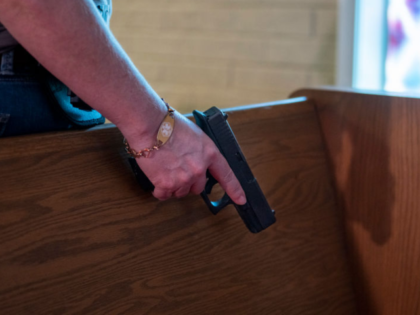
The Department of Justice’s Civil Rights Division has drawn a bright constitutional line in the sand: Montgomery County, Maryland, cannot enforce its ban on armed worshippers without inviting federal litigation. By signaling that it will treat the county’s policy as a violation of the First and Second Amendments, the Trump-era DOJ is reminding local officials that the right to keep and bear arms does not vanish at the threshold of a church, synagogue, or mosque. The move is more than a warning letter; it is a declaration that the federal government will no longer tolerate the piecemeal disarmament of law-abiding citizens under the guise of public-safety rules.
For the 2A community, the implications are immediate and strategic. First, the action underscores that religious liberty and self-defense are not competing interests but complementary protections; a congregation stripped of the means to resist an active shooter is, in effect, a congregation whose free exercise has been chilled. Second, the DOJ’s posture signals that future enforcement will likely focus on other jurisdictions that have quietly inserted “sensitive-place” exceptions into their permitting schemes. If Montgomery County folds, the precedent could cascade, forcing recalcitrant cities and counties to rewrite ordinances that treat houses of worship as gun-free zones by default.
Finally, the episode highlights a broader cultural shift: the federal government is now willing to use civil-rights enforcement tools to affirm, rather than restrict, the individual right to armed self-defense. That recalibration matters for litigation dockets, legislative drafting sessions, and the everyday decisions of congregants weighing whether to exercise their constitutional option to be armed. In short, the DOJ has turned a local zoning dispute into a national referendum on whether the Bill of Rights still applies on Sunday morning.


