

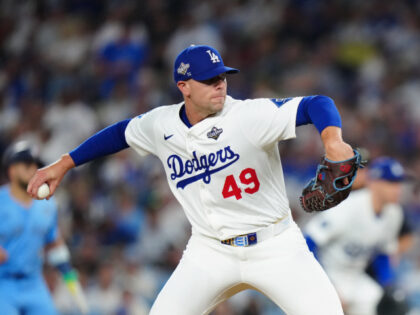
Blake Treinen’s decision to honor Charlie Kirk on his cap wasn’t just a personal tribute—it was a quiet act of defiance against the cultural gatekeepers who police what athletes are allowed to say. When MLB reached out to “chastise” the Dodgers reliever, they weren’t enforcing uniform rules so much as signaling that conservative voices remain unwelcome in the national pastime. Treinen’s cap became a flashpoint because it reminded the league that players still have First Amendment rights, even if the commissioner’s office prefers a sanitized, one-sided version of “player expression.”
For the 2A community, this episode is a familiar script: institutions that once claimed neutrality now treat support for traditional values or outspoken conservatives as disqualifying. Treinen’s experience mirrors the pressure faced by gun owners who display pro-Second Amendment messaging at work or in public—sudden HR visits, corporate disclaimers, or quiet career consequences. The message is consistent: speech is protected until it challenges the prevailing orthodoxy on guns, borders, or cultural issues. When a relief pitcher can’t wear a conservative activist’s name without league intervention, it underscores why many in the firearms community view corporate and institutional “neutrality” as anything but.
The larger implication is that self-censorship is the real endgame. If MLB can police a cap, other employers can police a bumper sticker, a range day photo, or a social media post. Treinen’s stand shows that pushback is possible, but it also highlights why 2A advocates must treat every cultural institution—from sports leagues to HR departments—as contested ground rather than neutral referees. The right to keep and bear arms means little if the right to speak about it is quietly revoked one cap at a time.


