

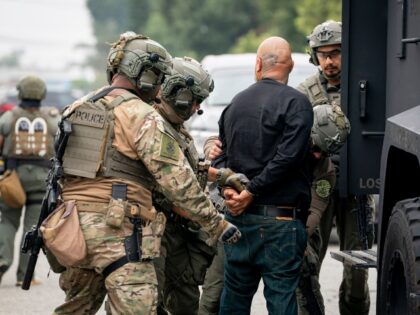
The Department of Homeland Security’s takedown of 26 Trinitarios members in Massachusetts on RICO charges is a textbook example of how transnational street gangs exploit open borders and sanctuary policies to embed themselves in American communities. These arrests underscore a grim reality: when federal immigration enforcement is undermined at the state level, criminal organizations treat the U.S. as an extension of their Caribbean turf, importing the same violence and intimidation tactics that destabilized their home countries. For the 2A community, the lesson is straightforward—law-abiding citizens cannot outsource their security to agencies that are sometimes handcuffed by political priorities; the right to keep and bear arms remains the last line of defense when government fails to secure the interior.
What makes this case especially relevant is the gang’s documented pattern of using firearms in drug trafficking, extortion, and targeted hits, often with weapons trafficked across state lines or obtained through straw purchases. The Trinitarios’ expansion into Massachusetts shows how permissive environments—sanctuary cities, reduced policing, and lax prosecution—create fertile ground for armed criminal networks to flourish. Second Amendment advocates have long argued that an armed citizenry deters precisely this kind of predation; when criminals know potential victims may be carrying, the calculus of street-level violence shifts. The DHS operation validates that argument by revealing how quickly these groups arm themselves once they establish a foothold.
Looking ahead, the implications stretch beyond one Massachusetts sweep. As long as border policies remain porous and interior enforcement inconsistent, similar gangs will continue to test new jurisdictions, bringing with them the same mix of illegal firearms and ruthless tactics. The 2A community’s response should be twofold: continued pressure for real immigration enforcement paired with unapologetic defense of the individual right to self-defense. When the state cannot—or will not—neutralize imported threats, the Constitution’s guarantee that citizens may keep and bear arms is not a policy preference; it is the practical backstop that keeps neighborhoods from becoming extensions of foreign gang territories.


