

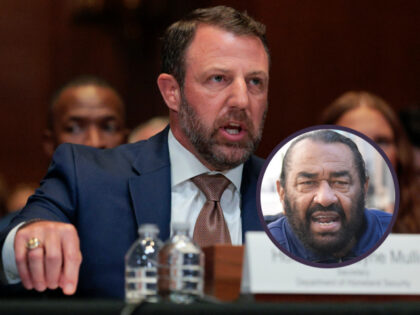
DHS Secretary Markwayne Mullin’s pointed question to Rep. Al Green during the Homeland Security Committee hearing wasn’t just parliamentary theater—it was a microcosm of how the administrative state now weaponizes identity politics to shield itself from scrutiny. When a cabinet official whose department oversees everything from border security to domestic firearms tracing feels compelled to preemptively defend his character rather than his policies, it signals that the real battleground has shifted from legislation to narrative control. For the 2A community, this matters because DHS and its sub-agencies (ATF, ICE, CBP) increasingly frame enforcement priorities through an equity lens; any pushback on magazine bans, pistol-brace rules, or “ghost gun” tracing can be reflexively labeled as coded racism rather than a defense of constitutional text.
The exchange also underscores a deeper strategic problem: congressional Democrats have discovered that accusing enforcement officials of bigotry short-circuits substantive debate on issues like red-flag laws and universal background checks that directly touch gun owners. Mullin’s refusal to let the slur stand forces the conversation back onto measurable outcomes—record border encounters, selective prosecution of FFL violations, and the quiet expansion of joint task forces that blend immigration and firearms data. Gun owners should watch these hearings not for gotcha moments but for the institutional habits they reveal: once “racism” becomes the default rebuttal, every future restriction on semiautomatic rifles or ammunition imports will arrive pre-loaded with moral condemnation instead of data.
Ultimately, the 2A community’s leverage lies in refusing to let federal agencies hide behind identity shields while they reinterpret statutes like the Gun Control Act or the National Firearms Act through administrative fiat. Mullin’s demand for clarity was a small but telling reminder that accountability still requires officials to answer for policy, not posture as victims of imputed prejudice.


