

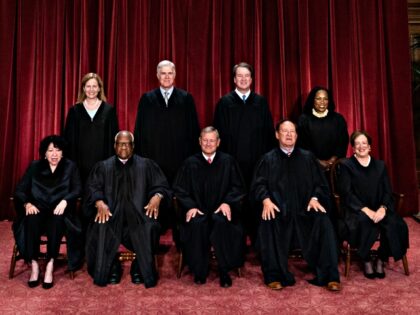
The Supreme Court’s recent immigration rulings aren’t just about border policy—they’re a quiet but unmistakable signal that the administrative state can be reined in when it oversteps. DHS lawyers are calling the decisions “victories for the rule of law,” and they’re right: the Court made it harder for lower courts and activist agencies to tie the hands of federal officers trying to do their jobs. For the 2A community, that matters because the same legal machinery used to handcuff immigration enforcement has been turned on gun owners for years—through ATF rule-by-letter, expansive “ghost gun” definitions, and pistol-brace reinterpretations that arrived with zero legislative input. When the Court reminds agencies they must color inside the lines drawn by Congress, it weakens the precedent that lets regulators rewrite statutes on the fly, whether the target is migrants or magazine-fed rifles.
What’s especially telling is how quickly the administrative class is claiming credit for “common sense.” That language usually precedes the next round of regulatory creativity aimed at lawful gun owners. The 2A takeaway is straightforward: victories at the border show that pushback works when it’s grounded in statutory text and constitutional structure rather than policy preferences. Gun-rights litigators watching these cases will note the Court’s willingness to limit nationwide injunctions and agency freelancing; those same tools have been used to stall or gut pro-2A laws in multiple states. If the administrative state learns it can’t simply declare new crimes by press release, the next ATF “guidance” on braced pistols or forced-reset triggers may face a steeper climb.
Longer term, the decisions reinforce a broader principle that should comfort every rights-bearing citizen: the Constitution still sets outer boundaries even when one administration or another wants to move the goalposts. Immigration enforcement and the right to keep and bear arms both depend on the same structural limits—separation of powers, enumerated authority, and judicial refusal to let agencies legislate. When those limits are respected in one arena, the precedent travels. The 2A community has every reason to treat Thursday’s rulings as more than an immigration story; they’re a reminder that the administrative tide can be turned when courts insist on actual law instead of bureaucratic will.


