

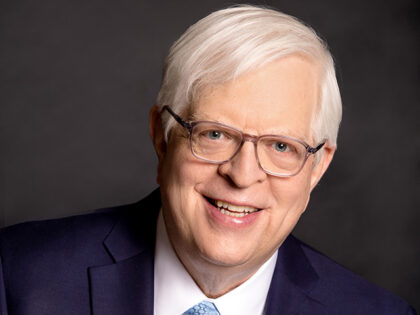
Dennis Prager’s appearance on The Alex Marlow Show lands like a quiet but unmistakable warning shot for anyone who still believes that liberty is ultimately defended by the character of the people who possess it. At seventy-eight, and still recovering from a paralyzing fall, Prager did not dwell on personal hardship; instead he zeroed in on the cultural surrender of wisdom itself—the slow-motion abandonment of the hard, old habit of distinguishing good from evil. For the Second Amendment community that observation is not abstract philosophy; it is an after-action report. When a society stops asking whether an act is right or wrong and begins asking only whether it is popular or efficient, every constitutional protection becomes negotiable, and the right to keep and bear arms is usually the first one placed on the auction block.
The timing of Prager’s remarks is equally telling. He spoke just weeks after the Supreme Court’s Bruen framework began reshaping lower-court dockets, and only days after several blue-city mayors floated “violence interrupter” programs that pointedly omit armed self-defense as a legitimate option. In that climate, the decline of wisdom is not an ivory-tower concern; it is the precondition that lets mayors, judges, and bureaucrats treat the individual right to arms as an eccentric hobby rather than a safeguard against both crime and overreach. Prager’s larger point—that the battle of good versus evil is still the central drama of human history—reminds gun owners that their fight is not simply about magazine capacity or carry permits; it is about whether a culture still believes citizens can and should be trusted to make life-and-death decisions in an instant.
The practical takeaway for the 2A world is therefore twofold. First, training and marksmanship are necessary but insufficient; the community must also cultivate the vocabulary of moral clarity that Prager says is fading. Second, every legislative skirmish over “assault weapons” or “red-flag laws” is downstream of that vocabulary. If the public stops believing that free people are competent to judge good and evil, no quantity of legal briefs will save the Second Amendment from being reclassified as a privilege doled out by experts. Prager’s post-injury message is therefore an unexpected call to arms—not for more hardware, but for the intellectual and moral infrastructure that alone makes hardware meaningful.


