

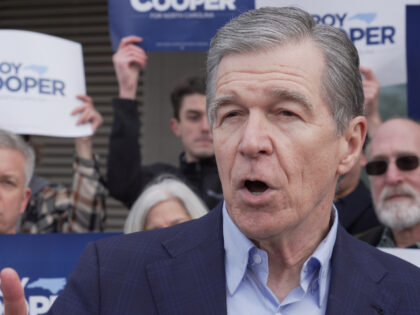
In a move that should alarm every law-abiding citizen, former North Carolina Governor Roy Cooper’s early-release policies funneled violent offenders straight back onto the streets, where they quickly proved the folly of treating public safety as a partisan talking point. One of those beneficiaries went on to murder a 16-month-old child, while others turned their freedom into opportunities for sexual exploitation of minors—crimes that never should have been possible if the state had prioritized the rights of the innocent over the comfort of the guilty. For the 2A community, this isn’t just another sad headline; it’s a textbook demonstration of why the right to keep and bear arms exists in the first place: when government fails at its most basic duty of incapacitating predators, individuals must retain the means to protect their families without waiting for the next bureaucratic failure.
The political calculation here is as predictable as it is dangerous. Cooper, now eyeing a U.S. Senate seat, built his record on progressive criminal-justice reforms that emphasized reduced sentences and quicker releases, all while downplaying the predictable human cost. Those policies didn’t just release statistics—they released people with demonstrated histories of violence who then inflicted irreversible harm on the most vulnerable. The 2A angle is straightforward: every time a state signals that it will not reliably separate violent actors from society, it strengthens the case for shall-issue carry, constitutional carry, and the broader principle that self-defense is a natural right, not a privilege granted by politicians who later campaign on the wreckage their leniency created.
What makes this story especially relevant to gun owners is the recurring pattern—soft-on-crime governance followed by demands for more gun control when the predictable violence spikes. Cooper’s record offers a clear rebuttal: the problem isn’t too many firearms in responsible hands; it’s too few consequences for those who have already forfeited their right to walk free. Voters weighing his Senate bid should remember that the same administration that released these offenders is unlikely to champion policies that empower citizens to defend themselves when the system fails again.


