

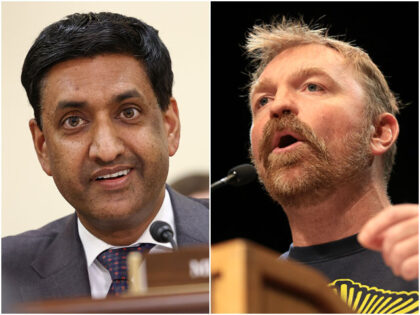
Rep. Ro Khanna’s decision to headline a June 5 rally for Maine Senate hopeful Graham Platner is more than routine party solidarity—it’s a calculated bet that voters will overlook the candidate’s past statements and focus on the national progressive brand. Platner’s campaign has already drawn scrutiny for comments that appeared to question the individual right to keep and bear arms, and Khanna’s presence effectively tells the national donor class that those positions are not disqualifying. For Second Amendment supporters, the pairing is a reminder that even in a state with deep hunting traditions, coastal money and coastal messaging can still attempt to redefine what “moderate” means on gun rights.
The timing matters. Maine’s open Senate seat is one of the few 2026 battlegrounds where rural, working-class voters could still swing the outcome, yet Khanna is importing the same California framework that produced magazine bans, “ghost gun” registration schemes, and red-flag expansions. Platner’s defenders argue the candidate has “evolved,” but the evolution conveniently tracks the demands of national fundraising rather than any new data on defensive gun uses or the ineffectiveness of prior restrictions. If Platner wins the nomination with Khanna’s imprimatur, expect the same pattern seen in Virginia and Colorado: once in office, the pressure to deliver on the national gun-control checklist becomes nearly irresistible.
For the 2A community the lesson is straightforward. Races that once felt safely distant now require the same level of scrutiny and early engagement previously reserved for coastal strongholds. Every dollar and endorsement Khanna brings to Maine is an attempt to normalize the idea that questioning the Second Amendment is compatible with representing a state whose economy and culture are tied to lawful firearm ownership. The June 5 rally is therefore not just a campaign stop—it is an early signal of which constitutional principles the national left intends to test in 2026.


