

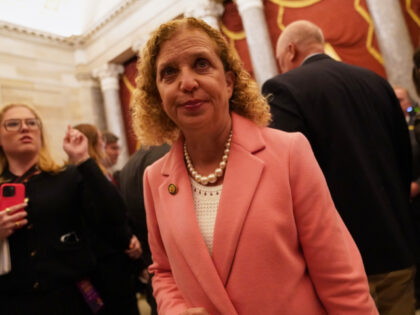
Rep. Debbie Wasserman Schultz’s warning that deporting Haitian TPS recipients will spike grocery, housing, and health-care costs is the latest attempt to frame immigration enforcement as an economic catastrophe for ordinary Americans. The argument collapses under basic supply-and-demand scrutiny: an influx of low-skilled labor may temporarily suppress wages in certain sectors, but it simultaneously drives up demand for the very goods and services she claims will become scarce, while shifting long-term costs onto taxpayers through schools, emergency rooms, and housing stock already strained by rapid population growth. For the firearms community the connection is direct—states and cities absorbing large, sudden migrant populations have repeatedly shown measurable upticks in property crime and gang activity, trends that historically translate into tighter restrictions on lawful carry and ownership once progressive prosecutors and city councils respond with “public safety” measures aimed at everyone except the criminals.
The deeper implication is that the same political class now lamenting higher prices is the one that spent years demonizing the Second Amendment as the supposed root of violence while simultaneously importing populations whose home-country homicide rates dwarf those of even the most troubled American cities. Law-abiding gun owners understand that rights are not contingent on economic spreadsheets; they are a hedge against the disorder that follows when governments prioritize non-citizens over citizens and then disarm the citizens to manage the fallout. If TPS expansions continue without rigorous vetting or numerical limits, the 2A community should expect renewed pushes for red-flag laws, magazine bans, and permitting schemes sold as responses to the very crime waves mass low-skilled migration tends to generate.
Ultimately, Wasserman Schultz’s price-hike narrative serves a familiar purpose: it distracts from the policy choice to treat temporary protected status as a permanent back-door amnesty while American citizens absorb the downstream effects in both their wallets and their neighborhoods. The 2A constituency has watched this cycle before—import the problem, blame the symptom on guns, restrict the law-abiding—and recognizes that secure borders and secure rights are not competing priorities but mutually reinforcing ones.


