

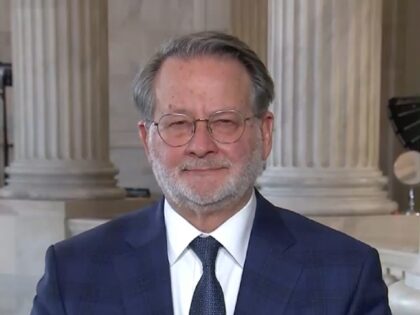
Sen. Gary Peters’ public plea for the military to defy “illegal orders” from President Trump over Iran is less about constitutional guardrails and more about a calculated political message that the 2A community should read as a warning shot. By framing any future kinetic action against Iran as presumptively unlawful, Peters is attempting to pre-delegitimize the Commander-in-Chief’s authority at the precise moment when the same institutional actors could one day apply that same logic to domestic firearms policy. The subtext is unmistakable: if a president’s national-security decisions can be portrayed as rogue, then so can his directives to agencies like the ATF or DOJ that touch on the Second Amendment.
The timing is equally instructive. With the 2024 election cycle looming and Democrats already telegraphing plans to revive assault-weapon restrictions and universal background-check mandates, Peters’ rhetoric serves as a dry run for how future administrations might justify bypassing or even nullifying pro-2A executive actions. If career military officers can be publicly encouraged to second-guess presidential orders on Iran, it is not a stretch to imagine parallel pressure campaigns aimed at career civil servants inside the ATF or FBI when those agencies receive directives to loosen regulations or halt controversial rulemaking. The principle being tested is simple: once you normalize the idea that the president’s lawful orders are optional, every enumerated right—including the one protecting an armed citizenry—becomes negotiable.
For gun owners, the takeaway is that institutional resistance is no longer an abstract constitutional theory; it is an active political strategy with tangible downstream effects on the right to keep and bear arms. The same senators now lecturing generals about Iran will, if given the chance, expect those same institutions to treat pro-2A policies as presumptively suspect. The fight over whether the president can order a strike on a foreign adversary is therefore inseparable from the fight over whether the next administration can order the ATF to redefine pistol braces or reclassify semiautomatic rifles. In both cases, the underlying question is whether elected leadership or an unaccountable bureaucracy ultimately decides what the Constitution permits.


