

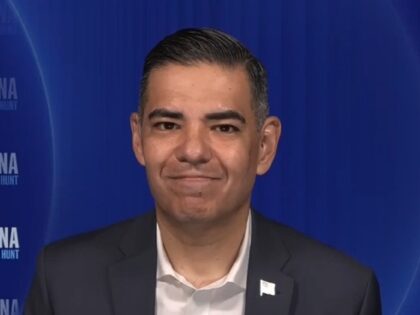
Rep. Robert Garcia’s claim that Democrats are now “investigating” the parts of Washington, D.C., that President Trump is “actively destroying” is less about oversight and more about political theater aimed at preserving the very federal machinery that has long been weaponized against gun owners. While Garcia frames routine administrative reforms—staff reductions, regulatory rollbacks, and a return of certain functions to the states—as some kind of constitutional crisis, the 2A community recognizes the real target: the entrenched bureaucracy at ATF, DOJ, and related agencies that has spent the last decade churning out pistol-brace rules, frame-and-receiver redefinitions, and zero-tolerance enforcement actions that treat lawful gun owners like domestic threats. By elevating these bureaucratic tweaks to the level of national emergency, Garcia is signaling that any attempt to shrink the administrative state will be met with lawfare, not legislative debate.
The deeper implication is that Democrats have grown comfortable treating federal agencies as partisan instruments rather than neutral executors of statute. When Trump moves to restore presidential control over the executive branch—something the Constitution actually contemplates—Garcia’s response is to launch investigations, not to defend the underlying laws those agencies are charged with enforcing. For gun owners this matters because the same agencies that spent four years reinterpreting “engaged in the business” or “readily convertible” to ensnare hobbyists are now being portrayed as sacrosanct institutions that cannot be touched without endangering democracy itself. The 2A community has watched this movie before: every time a Republican administration tries to claw back regulatory overreach, the response is accusations of authoritarianism followed by selective leaks and congressional theater designed to tie up reform for years.
What Garcia is really defending is the status quo in which unelected officials at ATF and DOJ can keep moving the goalposts on what constitutes a firearm, a dealer, or even protected speech about firearms, all while Congress remains gridlocked. If Democrats succeed in framing routine personnel and policy changes as existential threats, they will have created a permanent shield around the very offices that have driven the surge in NFA applications, pistol-brace litigation, and FFL compliance costs. The 2A community should treat this not as a sideshow about D.C. real estate, but as an early warning that any future attempt to rein in administrative gun control will be met with the same “investigation” reflex—unless the political cost of that tactic is made unmistakably clear.


