

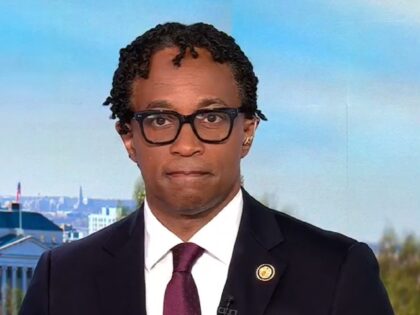
Rep. Wesley Bell’s CNN appearance underscores a widening rift inside the Democratic Party, where candidates who treat Israel as anything less than an indispensable frontline ally against Iran-backed terror networks are being punished at the ballot box. Bell’s observation that “some folks don’t quite understand” Israel’s role is polite Beltway-speak for a harsher reality: progressive activists are successfully redefining the party’s foreign-policy lane, and that redefinition carries direct consequences for how the United States arms itself and its partners. When Israel’s qualitative military edge is questioned inside one major party, the same skepticism inevitably migrates to domestic debates over which citizens should be trusted with modern defensive tools.
For the 2A community the lesson is straightforward: the same coalition pushing “Israel accountability” measures is already testing parallel language against American gun owners—red-flag expansions, magazine bans, and registration schemes framed as “public-health” interventions. If primary voters reward candidates who view a proven democratic ally as suspect, they are unlikely to defend the rights of law-abiding citizens whom coastal elites likewise regard as politically inconvenient. The electoral math is simple; every House seat that flips further left on Israel is one more vote that can be counted on to treat the Second Amendment as a loophole rather than a cornerstone.
The practical takeaway is vigilance at every level of the ballot. Pro-2A organizations have long tracked foreign-aid packages because they reveal which members still grasp that strong allies and an armed citizenry both rest on the same principle: deterrence works when the good guys are better armed than the bad ones. Bell’s comments are an early warning flare; the 2026 midterms will show whether Democratic voters have internalized that message or whether the party’s leftward drift on national security will drag the right to keep and bear arms down with it.


