

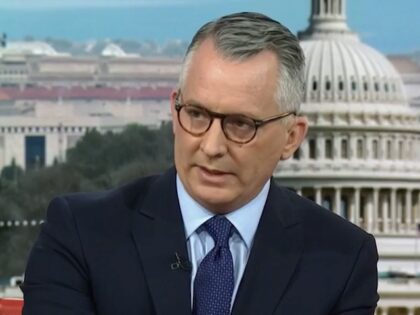
Former Florida Rep. David Jolly’s claim that he would win the governor’s race tonight as a Democrat is less a prediction than a political Rorschach test—one that reveals how far the party’s messaging has drifted from the state’s gun-owning mainstream. Jolly’s pivot from Republican to Democrat was sold as a principled stand against “extremism,” yet his new team’s platform still includes the same menu of restrictions—permitless-carry bans, “assault-weapon” registration schemes, and red-flag expansions—that have already backfired in Tallahassee. Florida voters have watched neighboring states tighten the vise on lawful ownership only to see crime tick upward, not downward, and they are unlikely to trade their shall-issue freedoms for the uncertain promise of coastal-suburban swing votes.
The deeper irony is that Jolly’s optimism hinges on a national environment that has grown more, not less, supportive of the Second Amendment since 2022. Record background-check numbers, the surge in first-time female and minority buyers, and the Supreme Court’s Bruen decision have shifted the Overton window even in a swing state like Florida. If Jolly truly believes a Democratic nominee can flip the state while simultaneously courting the same donor class that funds Giffords and Everytown, he is betting against the very suburban gun owners who have become the decisive voting bloc in recent legislative sessions. Those voters remember which party tried to shutter gun stores during a pandemic and which one passed constitutional carry; they are not likely to forget by November.
For the 2A community, Jolly’s boast is therefore less a warning than a calibration tool. It tells us exactly where the cultural battlefield lies: not in the Florida Panhandle or the I-4 corridor’s rural counties, but in the still-persuadable suburbs where safety concerns meet property values. Pro-Second Amendment groups would do well to meet that audience with data—on defensive gun uses, on the failure of gun-free zones, on the economic impact of the state’s firearms industry—rather than ceding the narrative to a candidate who mistakes donor zip codes for electoral destiny.


