

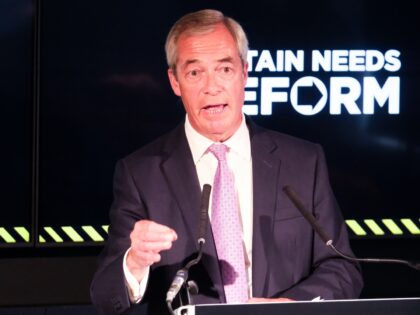
When British counter-terrorism officers quietly reopened the file on last year’s suspected firebombing of Nigel Farage’s Kent home, they weren’t just dusting off an old case—they were acknowledging that political violence in the UK has graduated from eggs and placards to accelerants and Molotovs. The timing is telling: Reform UK’s surge in the polls has coincided with a spike in doxxing, “direct action” threats, and now literal fire at the doorstep of its most recognizable face. For American gun owners watching across the Atlantic, the episode is a real-time demonstration of what happens when a citizenry is stripped of effective means of self-defense and then told to trust the state to keep the peace. Farage’s security detail may have thwarted the attack, but the fact that the attempt was even thinkable underscores how a disarmed population becomes a soft target for ideologically motivated arsonists.
The deeper lesson for the 2A community is that the same arguments deployed against British subjects—“you don’t need a gun, the police will protect you”—are already being road-tested in U.S. cities that treat armed self-defense as suspect. When the state’s monopoly on force is both unreliable and selectively enforced, political violence migrates from rhetoric to Molotovs with little friction. Farage’s reopened inquiry also spotlights the asymmetry: while counter-terror assets scramble to investigate an attack on a populist politician, legacy media still frame armed American citizens as the inherent threat. The contrast is instructive. A lawfully armed homeowner in most U.S. states can create a deterrent that does not require a detective to open a cold-case file after the fact.
Ultimately, the Farage episode is less about one man’s security than about the predictable outcome when a culture decides that political disagreement justifies physical intimidation. For Second Amendment advocates, the takeaway is straightforward: rights that exist only on paper or behind a police cordon are rights that can be set alight—sometimes literally. Maintaining the individual right to keep and bear arms is not an abstract cultural preference; it is the material difference between a foiled arson attempt that becomes tomorrow’s headline and one that never makes the news because the would-be firebomber never gets close enough to strike the match.


