

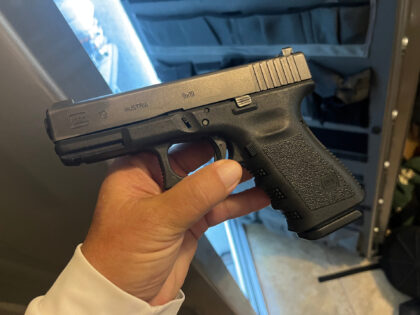
Connecticut’s latest gun-control salvo, signed into law by Governor Ned Lamont, singles out Glock and its clones for an outright sales ban, pushing the state into a three-way tie with California and New York for the most aggressive handgun prohibitions in the country. Rather than targeting criminal misuse, the measure effectively outlaws the single most popular defensive pistol platform in America—one that law-abiding citizens, off-duty officers, and competition shooters have relied on for decades—while leaving the underlying criminal market untouched. The move underscores a familiar pattern: when data fail to show that “assault weapons” or “high-capacity magazines” drive violent crime, legislators simply re-brand the next widely owned firearm as the new public-safety menace.
For the 2A community the implications are immediate and chilling. Lawful owners in Connecticut now face a patchwork of registration schemes, “grandfather” clauses that can be repealed at any legislative session, and the very real prospect that today’s legal firearm becomes tomorrow’s confiscation target. The ban also hands neighboring states a competitive advantage; gun stores just across the Massachusetts or Rhode Island lines are already reporting increased traffic from Nutmeg State residents stocking up before the law takes effect. More broadly, the legislation tests the limits of the Supreme Court’s Bruen framework by imposing a flat prohibition on a class of arms that are in common use for lawful purposes—an argument sure to fuel fresh litigation and, potentially, another trip to the high court.
Beyond the courtroom, the Glock ban crystallizes the cultural fault line running through American gun policy: millions of citizens view the pistol as an unremarkable tool of personal responsibility, while a vocal political class treats its very existence as intolerable. Each new restriction chips away at the practical exercise of the right to keep and bear arms, substituting legislative taste for constitutional text. As other states watch Connecticut’s experiment, the 2A community will be taking notes—on which politicians treat popular firearms as disposable and on how quickly litigation and electoral consequences can blunt the next round of bans.


