

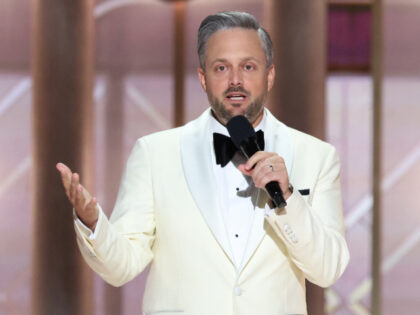
Nate Bargatze’s appearance at President Trump’s White House UFC event has triggered the predictable outrage cycle, with some fans declaring they can no longer support a comedian who simply showed up where the sitting president happened to be. The backlash reveals less about Bargatze’s politics and more about how thoroughly cultural consumption has been weaponized: attending a sporting event hosted by a Republican president is now treated as a political litmus test rather than a neutral social outing. For the 2A community this episode is a reminder that the same reflexive cancellation tactics once aimed at gun owners are now being applied to anyone who refuses to perform public distance from conservative figures or events.
The deeper implication is that the entertainment industry’s progressive monoculture continues to police association rather than content. Bargatze’s stand-up has never centered on firearms or constitutional issues, yet his mere presence at a Trump-hosted function is enough to trigger boycott calls. This mirrors the long-running effort to stigmatize gun owners by equating ownership or even proximity to pro-2A politicians with moral failure. When comedians, athletes, or musicians face professional consequences for crossing invisible political lines, the message to the firearms community is clear: visibility and normalization remain contested territory, and every public figure who declines to self-censor expands the space in which law-abiding gun owners can exist without apology.
Ultimately the episode underscores why sustained cultural engagement matters as much as legislative defense. While some fans threaten to abandon a comedian over a photo op, millions of Americans continue to attend UFC events, purchase firearms, and vote without seeking progressive approval. Each instance of manufactured outrage that fails to produce real consequences weakens the tactic itself. For Second Amendment advocates, the takeaway is straightforward: keep showing up, keep normalizing, and refuse to treat basic social participation as a disqualifying act.


