

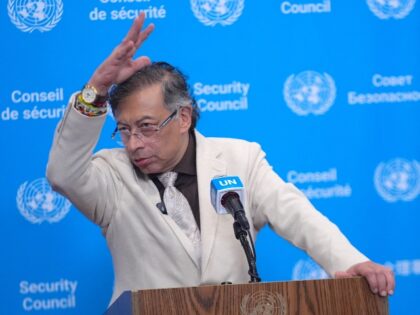
Gustavo Petro’s UN rant about the world “returning to the Nazis” is the kind of hyperbolic theater that plays well in certain circles but collapses under even modest scrutiny. The Colombian president, a former M-19 guerrilla who once embraced Marxist revolution, now lectures the planet on fascism while his own country wrestles with cartel violence, rural insecurity, and a government that has repeatedly floated gun bans and “citizen disarmament” schemes. The irony is thick: the same ideology that produced 20th-century totalitarianism is once again warning everyone else about totalitarianism, this time from the podium of the UN Security Council.
For the 2A community the takeaway is straightforward. When leaders equate political disagreement with Nazism, the next logical step is often the argument that only the state should hold serious firepower. Petro’s Colombia has already seen proposals to restrict civilian ownership and centralize control under the guise of “peace,” a pattern familiar to anyone watching Venezuela, Nicaragua, or any other experiment in concentrated state power. The lesson is that rhetoric about “returning to the Nazis” is frequently cover for returning to the very conditions that made armed citizens necessary in the first place—weak institutions, rising crime, and governments that view an armed populace as the real threat.
The broader implication is that 2A advocates should treat these UN performances as early-warning signals rather than isolated bluster. Every time a head of state inflates the Nazi label to score points, it normalizes the idea that private arms are inherently suspect. That framing travels quickly from international forums to domestic policy debates, which is why vigilance on the right to keep and bear arms remains essential even when the latest crisis seems far from American shores.


