

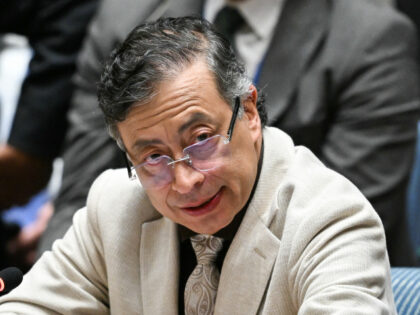
In a stunning reversal that caught even his own allies off guard, Colombia’s outgoing Marxist president Gustavo Petro has signaled the beginning of a formal transition to President-elect Abelardo de la Espriella, effectively conceding that the hard-left experiment he championed is ending. What makes this moment especially noteworthy for the firearms community is how quickly the rhetoric of “total peace” and citizen disarmament has given way to the practical necessity of handing power to a leader whose platform explicitly includes restoring the right to keep and bear arms. De la Espriella’s campaign promises—streamlined carry permits, an end to arbitrary confiscations, and recognition that armed citizens are a deterrent rather than a threat—stand in direct contrast to Petro’s push to further restrict an already tightly controlled civilian market. The abrupt pivot suggests that even ideologues recognize the political cost of leaving millions of Colombians defenseless against the very criminal networks the state has failed to dismantle.
For the broader 2A community, the Colombian transition serves as a real-time case study in how quickly gun-control regimes can be rolled back when voters experience the consequences firsthand. Record homicide rates in cities stripped of legal carry options, rural landowners repeatedly victimized by FARC remnants and cartel proxies, and a black market that armed only the predators all combined to produce an electoral backlash that Petro could no longer ignore. The incoming administration’s willingness to treat self-defense as a fundamental right rather than a privilege granted by bureaucrats offers a template Latin American nations watching the experiment can follow. It also underscores a recurring lesson: when governments prioritize ideology over security, citizens eventually reclaim the tools of their own protection, and the political class is forced to follow.


