

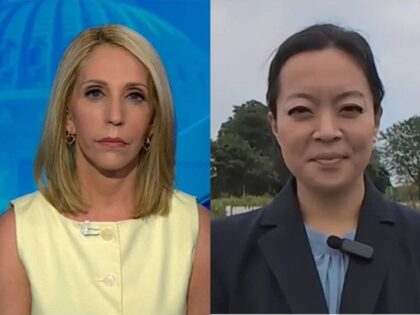
Dana Bash’s pointed exchange with Francesca Hong on CNN’s “Inside Politics” was more than a gotcha moment—it was a window into the political cost of flirting with “defund the police” rhetoric. Hong, a Democratic candidate for Wisconsin governor, danced around a direct yes-or-no on whether she still supports slashing police budgets, leaving viewers with the impression that the slogan remains popular in activist circles but toxic on the campaign trail. For the 2A community, the exchange is a reminder that the same political forces pushing to hollow out law-enforcement budgets often pair that agenda with restrictions on lawful gun ownership; when police response times stretch and prosecutions falter, the practical value of the right to keep and bear arms rises in direct proportion.
The broader implication is that voters in swing states are increasingly unwilling to trade public safety for ideological experiments. Wisconsin’s bruising crime spikes after 2020—carjackings in Milwaukee, retail theft waves, and a homicide rate that remains stubbornly above pre-pandemic levels—have made “re-imagining” policing a risky electoral proposition. Gun owners watching this race understand that an under-funded, demoralized police force cannot be everywhere; the ability to defend oneself, one’s family, and one’s business becomes not a theoretical liberty but a daily necessity. Hong’s verbal two-step suggests her campaign has read the same polling data the rest of the country has: support for reducing police funding has cratered outside deep-blue enclaves.
Finally, the episode underscores a strategic shift inside the Democratic Party. Candidates who once competed to offer the most sweeping reform proposals are now recalibrating toward “reform and retain,” or at least refusing to revisit the issue on camera. That recalibration matters to Second Amendment supporters because it signals that the political marketplace still prices safety and personal responsibility higher than slogans. As long as candidates fear being pinned to the defund label, the constitutional right to armed self-defense retains an unspoken but powerful constituency—one that will continue to push back against any package of policies that simultaneously weakens law enforcement and limits lawful gun ownership.


