

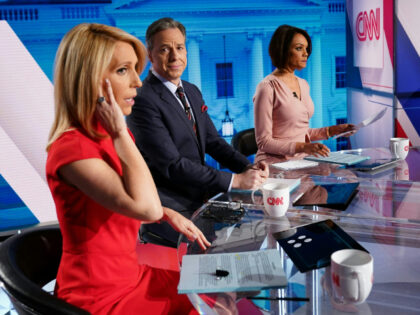
CNN’s newsroom has apparently become so consumed by corporate anxiety that staffers are treating their boss’s office like a group therapy session, a telling snapshot of how fragile legacy media institutions have grown when their survival hinges on boardroom chess moves rather than audience trust. The reported “psychiatrist’s couch” scene at CNN is less about journalistic integrity and more about employees realizing their platform’s future is being negotiated by executives who answer to shareholders, not viewers—an environment where editorial direction can shift overnight based on who writes the next check. For the 2A community this matters because CNN has long been a reliable amplifier of gun-control narratives; any merger-driven pivot toward profitability could force a recalibration if the new ownership decides that alienating millions of armed, news-consuming Americans is bad business.
What makes the episode especially instructive is how it exposes the disconnect between coastal media elites and heartland gun owners who already treat most cable news with skepticism. When reporters are more worried about their 401(k)s than about getting the facts straight on magazine bans or red-flag laws, the quality of coverage on firearms policy inevitably suffers, giving pro-2A voices an opening to fill the information vacuum with primary-source reporting and data the networks routinely ignore. The Paramount-Warner drama also reminds us that media consolidation rarely produces more viewpoint diversity; instead it concentrates power in fewer hands, making it even more important for Second Amendment advocates to support independent outlets, citizen journalists, and direct-to-consumer platforms that cannot be bought or merged out of existence.
Ultimately the spectacle at CNN is a symptom of an industry whose business model is collapsing under its own bias, and that weakness creates both risk and opportunity for gun owners. If the merged entity decides to soften its reflexive anti-gun stance to chase ratings, the 2A community should be ready to exploit the opening with disciplined messaging; if the tone stays hostile, the episode simply accelerates the migration of viewers to outlets that treat the right to keep and bear arms as a constitutional given rather than a policy debate. Either way, the image of journalists seeking therapy over a merger underscores how little leverage legacy media now holds over an armed, informed populace that can fact-check in real time and vote with its remote.


