

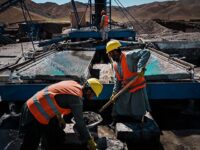
China’s decision to embed a technical delegation inside Iran’s rare-earth belt is more than a geology field trip—it’s a strategic move to lock down the minerals that make everything from night-vision tubes to precision-guided munitions possible. While Beijing publicly frames the mission as “exploration and processing,” the timing is telling: Western sanctions have already choked off many traditional supply routes, and Iran’s vast, largely untapped deposits of neodymium, praseodymium, and dysprosium sit outside the reach of most U.S. export controls. By offering assay labs, solvent-extraction know-how, and downstream refining capacity, China is effectively underwriting Tehran’s ability to monetize these resources—and, in the process, tightening its own grip on the choke-points of modern defense manufacturing.
For the Second Amendment community the implications are immediate and tangible. Every high-end riflescope, holographic sight, laser rangefinder, and ballistic computer relies on rare-earth magnets and phosphors that are overwhelmingly sourced from a single geopolitical bloc. If Beijing and Tehran deepen their cooperation, the same supply chain that feeds civilian optics also feeds the guidance sections of missiles and the actuators of advanced armored vehicles. A disruption—whether from sanctions snap-backs, regional conflict, or simple export quotas—would ripple from the factory floor straight to the gun counter, driving up prices and constraining availability of premium American-made accessories. In short, the minerals under Iranian sand are now a live variable in the cost and capability of the very tools citizens rely on to exercise their right to keep and bear arms.
The prudent response is diversification, not dependence. Lawmakers who champion both strong export controls and a robust domestic mining revival are effectively writing an insurance policy for American gun owners. Until those policies bear fruit, shooters would do well to treat high-end optics and electronics as the finite, geopolitically exposed commodities they are—stock what you need, maintain what you have, and keep an eye on the periodic table as closely as you keep one on pending legislation.


