

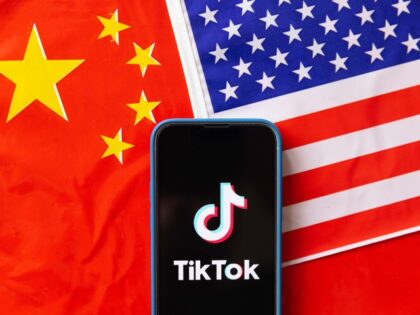
The latest remarks from House Select Committee on the Chinese Communist Party Chair John Moolenaar underscore a stubborn reality: even after cosmetic tweaks, TikTok’s opaque recommendation engine still steers what hundreds of millions of Americans see every day, while the data pipeline feeding that engine remains tethered to Beijing. For Second Amendment advocates who have watched legacy platforms throttle lawful firearms content for years, this is déjà vu with higher stakes—only now the gatekeeper answers to a foreign adversary whose strategic documents explicitly call the U.S. gun culture a vulnerability to be exploited. When an algorithm can quietly de-boost videos demonstrating safe firearm handling, lawful carry methods, or the mechanics of self-defense, the effect is not merely commercial suppression; it is a soft form of information warfare that shapes public perception of the right to keep and bear arms without ever firing a shot.
That data-security concern Moolenaar flags is equally salient for the 2A community. TikTok’s parent company ByteDance is legally obligated under Chinese national-intelligence law to hand over user data on request; the same datasets that reveal political leanings, geolocation patterns, and social graphs can be cross-referenced with ATF trace data, state permit rolls, or even innocuous-seeming “gun owner” interest tags scraped from millions of phones. The result is a ready-made targeting list that no domestic tech firm could lawfully assemble. Pro-2A creators who once relied on the platform to bypass mainstream-media gatekeepers now face a Hobson’s choice: accept the risk that their audience data ends up in the hands of a regime openly hostile to private firearm ownership, or migrate to U.S.-controlled alternatives whose own moderation policies remain only marginally friendlier.
The broader implication is strategic, not merely technical. If Congress ultimately forces a divestiture or ban, the 2A community should treat that outcome as a market opening rather than a simple regulatory footnote. Domestic platforms that demonstrably protect both free speech and user data will inherit an engaged audience already primed to value the ability to discuss, demonstrate, and defend the Second Amendment without foreign algorithmic interference. In short, the TikTok saga is a reminder that control of the digital public square is inseparable from the practical exercise of constitutional rights—and that vigilance over both the code and the data is now part of the modern defense of the right to keep and bear arms.


