

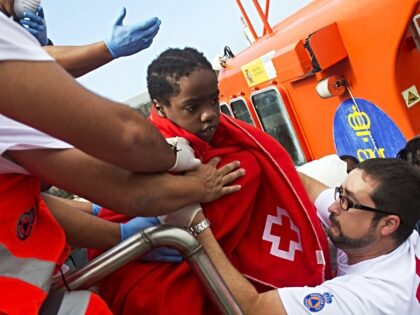
Spain’s decision to airlift more than five hundred unaccompanied minor girls from the North-African enclave of Ceuta onto the mainland is being sold as a humanitarian necessity, yet it quietly underscores a deeper truth: when governments lose control of their borders, they also lose control of the narrative they use to justify disarming their own citizens. The same socialist coalition that now scrambles to relocate hundreds of children first spent years tightening Spain’s already restrictive gun laws, leaving ordinary Spaniards with fewer tools to protect themselves should the social fabric begin to fray under the weight of sudden, large-scale demographic change. In Ceuta the state’s monopoly on force proved illusory; razor-wire and naval patrols could not stop a determined surge, and the same calculus applies on the mainland once the girls—and the networks that facilitated their passage—are dispersed across cities already struggling with integration.
For American Second Amendment advocates the lesson is immediate. Europe’s experiment in near-total civilian disarmament has produced a two-tier reality: political and media elites remain insulated by private security and gated neighborhoods, while working-class districts absorb the cultural and criminal fallout of policies they were never allowed to debate with ballots or bullets. Spain’s urgent transfer is not merely a logistical footnote; it is the predictable result of a worldview that treats self-defense as a state-conferred privilege rather than an inalienable right. When the next wave arrives—and demographic momentum plus open Mediterranean routes make future surges probable—Spanish citizens will again confront the hard truth that rights surrendered are rarely returned without a fight, and that the only reliable insurance against chaos is an armed, law-abiding populace capable of securing its own communities when the government cannot.


