

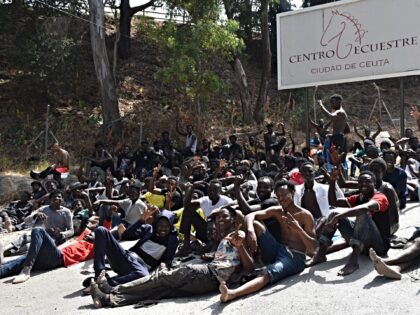
The images coming out of Ceuta show a once-orderly schoolyard turned into an open-air latrine, with tents pitched on playground asphalt and human waste pooled beside swing sets. What began as a humanitarian gesture—opening public buildings to “new arrivals”—has become a textbook case of how quickly social trust evaporates when property rights and rule of law are treated as optional. For the Second Amendment community, the lesson is immediate: when the state cannot, or will not, secure its own perimeter, the burden of security shifts to individuals and families who must decide whether they will remain disarmed wards of a faltering system or responsible citizens exercising their natural right to self-defense.
Spain’s experiment with open-door policies has produced the predictable result—overwhelmed local services, skyrocketing petty crime, and the quiet arming of those who can afford private security. The same dynamic is visible on both sides of the Atlantic whenever sanctuary policies collide with real-world numbers. Gun-owning Americans watching the footage are reminded that an armed citizenry is not a theoretical preference; it is the last line between orderly neighborhoods and the sort of squalor now on display in Ceuta. The migrants did not bring firearms; they simply exposed the vacuum left when a government forgets that sovereignty begins with controlled borders and enforceable laws.
The deeper implication is cultural. A population conditioned to view self-reliance as suspect will, in the end, demand still more state protection that never arrives. Conversely, a culture that prizes marksmanship, preparedness, and the legal carry of defensive arms tends to maintain cleaner streets and safer schools because deterrence is distributed rather than centralized. Ceuta’s trashed playground is therefore more than a sanitation story; it is a warning poster for any polity tempted to outsource its most basic duty—securing the commons—to abstract notions of human rights detached from reciprocal obligations. The right to keep and bear arms exists precisely so free people never have to debate whether their children’s schoolyard will be defended by responsible neighbors or left to whoever shows up first.


