

Italy’s sudden threat to treat Spain like a third-country border is more than a bureaucratic flex—it’s a reminder that the Schengen dream is cracking under the weight of mass migration and weak external controls. When Rome says it may re-impose checks on every truck and ferry arriving from Spanish ports, it is telegraphing that the EU’s “free movement” compact only works when every member actually guards the perimeter. For Americans who value the Second Amendment, the lesson is immediate: sovereignty is the prerequisite for any right; once a nation loses the ability to decide who enters, it also loses the political space to defend how its citizens arm themselves.
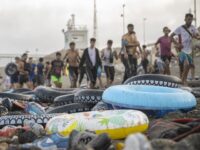
Spain’s enclave of Ceuta has become the latest flash-point because thousands of migrants from North Africa see it as the soft underbelly of Fortress Europe. Italy’s warning is therefore not about Ceuta itself; it is about forcing Madrid—and by extension Brussels—to confront the fact that open internal borders plus porous external ones are incompatible. The same political class now scrambling to re-establish checkpoints once sneered at national conservatives who warned that demographic surges from incompatible cultures would eventually require hard power to manage. That reversal matters to gun owners: every time a European capital concedes that culture and security are linked, it undercuts the transnational narrative that firearms in private hands are inherently dangerous.
The deeper implication for the 2A community is strategic. European governments are rediscovering that borders are not mere lines on a map but policy tools that determine whether self-defense remains a practical right or a polite theory. If Italy can justify re-bordering Spain over migration, American states can certainly justify constitutional carry over the same logic: a sovereign people must be able to protect itself when institutions falter. The Ceuta drama shows that even progressive governments will choose hard power when the migrant wave becomes undeniable; the only question left is whether they will also choose an armed citizenry before the next crisis arrives.


