

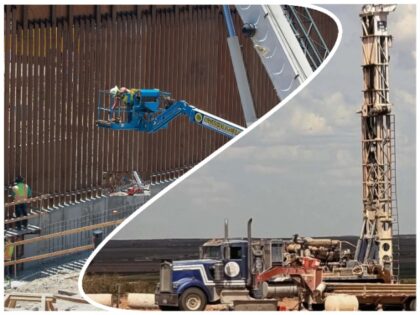
The decision to pause water-well drilling for the New Mexico border-wall segment is a textbook case of how federal land-use policy can ripple outward and touch every corner of the American West—including the communities that keep the Second Amendment alive. Ranchers who have grazed the same arid stretches for generations suddenly found themselves staring at the possibility that a single government contractor’s boreholes could lower the water table enough to dry up stock tanks and household wells. When those ranchers pushed back, the pause was granted almost overnight, proving that local pushback still carries weight even on projects wrapped in national-security rhetoric. For gun owners, the episode is a reminder that the same regulatory machinery that can shut down a well can just as easily shutter a range, restrict ammunition components labeled “environmental hazards,” or designate critical habitat across once-public shooting grounds.
What makes the story especially instructive is the voluntary nature of the pause. No court order, no act of Congress—just a calculation that bad optics and determined locals outweighed the marginal gain of a few extra yards of wall. That same calculus plays out whenever a state or federal agency eyes restrictions on lead ammunition, suppressor ownership, or even the footprint of a private shooting range. The ranchers’ success hinged on organization, documentation of existing water rights, and a willingness to frame their problem as a threat to a way of life rather than a narrow technical dispute. Second Amendment advocates who treat every encroachment—from ATF frames-and-receivers rules to U.S. Forest Service road closures—as someone else’s problem risk waking up to find the range bulldozed in the name of “multiple-use management.”
Ultimately, the New Mexico standoff underscores a broader truth: the right to keep and bear arms is exercised inside a physical landscape that can be regulated, re-zoned, or re-watered out from under you. Whether the issue is concrete mixing or cartridge components, the groups quickest to mobilize local knowledge and assert long-standing use are the ones still standing when the backhoes arrive. For 2A communities already juggling magazine bans and “ghost gun” edicts, the lesson is straightforward—treat access to land, water, and infrastructure as inseparable from the right to train, hunt, and pass skills to the next generation.


