

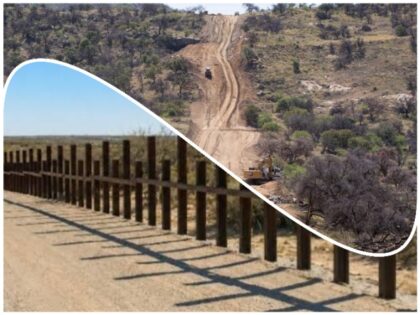
The decision by Customs and Border Protection to pause construction in Big Bend National Park is less a retreat than a tactical recalibration that reveals how border security and the Second Amendment are now locked in the same political crosshairs. Commissioner Scott’s move to consult “stakeholders” before resuming work is being sold as responsiveness, yet it underscores a deeper reality: every mile of unfinished barrier or surveillance tower is another stretch of the southern border where law-abiding Americans cannot count on federal protection and must therefore rely on their own preparedness. In a region where drug cartels already treat remote parkland as an open corridor, the pause effectively extends the timetable during which ranchers, hikers, and border landowners remain first responders by default—armed citizens exercising their constitutional right because the government has temporarily chosen politics over perimeter defense.
What makes the story especially salient for the 2A community is the precedent it sets for how future infrastructure can be stalled by little more than organized noise. Environmental groups and progressive media have framed the projects as an aesthetic assault on a cherished landscape, but the same template—litigation, local hearings, national media campaigns—has already been used against ranges, hunting access, and magazine-capacity restrictions. If a national-security installation inside a federally managed park can be frozen by public outcry, the lesson is clear: any expansion of the administrative state’s power to designate “sensitive areas” can be weaponized to limit where and how citizens exercise their rights. The pause in Big Bend is therefore not an isolated environmental spat; it is a skirmish in the broader campaign to normalize the idea that constitutional carry and national sovereignty are optional amenities subject to stakeholder review.
For gun owners, hunters, and those who see self-reliance as inseparable from border integrity, the takeaway is straightforward. The same political forces eager to halt physical barriers are equally comfortable re-drawing the map of permissible firearm use on public land. Until Congress draws an unambiguous line that treats operational control of the border as a non-negotiable Article IV responsibility rather than a permitting exercise, armed citizens will continue to fill the gap—both literally on the southern frontier and figuratively wherever federal inertia meets organized protest.


