

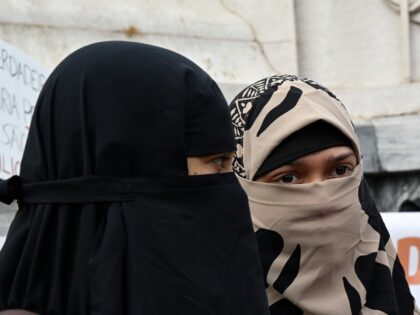
Portugal’s decision to outlaw full-face veils is more than a culture-war footnote; it is a deliberate reassertion that the state—not imported customs—sets the terms of public life. By framing the ban as a defense of “human identity,” Lisbon is acknowledging that anonymity in shared spaces is a privilege, not a right, and that governments may demand visibility when security or social cohesion is at stake. For Second Amendment advocates, the parallel is immediate: if a European democracy can condition participation in public life on the ability to be seen and identified, then the same logic can—and should—apply to the right to keep and bear arms. An armed citizenry is only credible when its members are likewise identifiable and accountable; the right to carry presupposes the duty to show one’s face when the state has a compelling interest.
The measure also exposes the selective nature of European “rights” discourse. Progressive critics who reflexively denounce any restriction on Islamic dress as bigotry have been conspicuously silent when the same governments curtail the right of self-defense or impose red-flag laws without due process. Portugal’s move therefore serves as a reminder that cultural confidence and individual liberty are not mutually exclusive; a society willing to defend its norms against incompatible imports is also more likely to tolerate armed, law-abiding citizens who visibly share those norms. In that sense, the burqa ban is less about fabric than about the principle that rights are reciprocal: if you want the protections of Western liberty, you accept the responsibilities—including the responsibility to be seen and, when necessary, to see the armed citizen standing beside you.


