

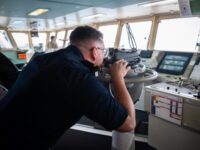
Britain’s decision to ready mine-clearance teams for the Strait of Hormuz after the latest Gulf peace accord is less about sweeping up yesterday’s war and more about locking in tomorrow’s shipping lanes. The narrow throat between Iran and Oman remains the world’s most tempting chokepoint; any state or proxy that can seed it with bottom influence mines can throttle 20 percent of global oil traffic overnight. London’s move signals that the Royal Navy intends to keep that artery open even if the ink on the treaty is barely dry—an implicit admission that paper promises alone do not deter the next round of hybrid coercion.
For the Second Amendment community the lesson is straightforward: when governments treat sea lanes the way American cities treat street crime—by rushing specialized teams after the fact rather than hardening the environment in advance—citizens rightly ask why the same logic shouldn’t apply at home. A mine-hunting flotilla is only as useful as the political will to keep it forward-deployed; similarly, an armed citizenry is only as effective as laws that let people actually carry. The Hormuz operation underscores how fragile “peace” can be when one side retains the ability to sow invisible weapons and the other must continually clear them. That same asymmetry exists on American streets whenever shall-issue carry or constitutional carry is rolled back: the law-abiding lose the means of instantaneous response while bad actors retain theirs.
The broader implication is that deterrence is infrastructure, not diplomacy. Whether the infrastructure is a squadron of autonomous mine-hunting vessels or a law-abiding citizen’s pistol on his hip, the principle is identical—visible, distributed, and always available before the next crisis erupts. The Royal Navy’s preparations in the Gulf are therefore a maritime reminder that rights and readiness travel together; weaken either and the lanes, literal or constitutional, become somebody else’s to close.


