

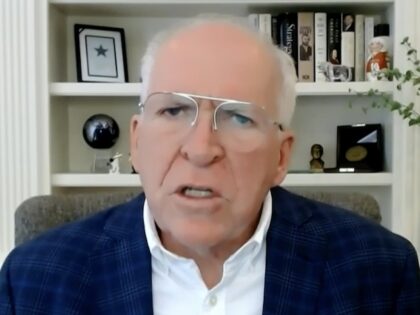
John Brennan’s prediction that law schools will one day dissect the “corruption” of President Trump and Attorney General Todd Blanche is less a forecast than a confession: the administrative state’s old guard is already scripting the next chapter of lawfare. By framing routine exercises of constitutional authority—such as reining in rogue agencies or appointing an AG who actually believes the Second Amendment means what it says—as academic case studies in graft, Brennan telegraphs the strategy: keep the permanent bureaucracy’s narrative alive in the classroom long after voters have rejected it at the ballot box. For the 2A community this is familiar terrain; we’ve watched the same institutions that once labeled “shall not be infringed” as an anachronism now train future clerks and regulators to treat gun-owners as presumptive threats whose rights require “balancing” against ever-shifting policy preferences.
The deeper implication is that the administrative state’s legitimacy crisis is now playing out in elite institutions that supply the legal priesthood. If tomorrow’s lawyers are taught that enforcing immigration law or auditing federal agencies constitutes corruption, then challenges to ATF pistol-brace rules, pistol stabilizing braces, or future magazine-capacity edicts will be reflexively coded as “extremism” rather than routine constitutional push-back. That framing inoculates the regulatory apparatus against democratic correction and shifts the Overton window so that only one side’s policy preferences are treated as legitimate exercises of state power. The 2A community’s task is therefore not merely to litigate the next rule, but to expose how the legal academy itself has become a transmission belt for administrative supremacy.
Brennan’s remark also underscores why institutional capture matters more than any single statute. Even if Congress codifies protections for braces or national reciprocity, a judiciary stocked with graduates steeped in Brennan-style assumptions can dilute those protections through “reasonable” balancing tests. The remedy is not to ignore the classroom, but to treat legal education as the next battlefield—supporting originalist faculty, alternative accreditation pipelines, and public-interest litigation shops that refuse to concede the moral high ground to the administrative state. In short, the fight over the Second Amendment will be won or lost in the footnotes of tomorrow’s casebooks; Brennan has simply announced which side he expects to write them.


