

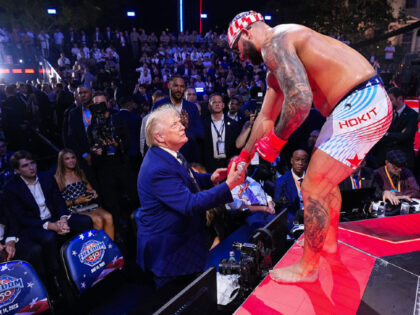
Boston College history professor Heather Cox Richardson’s comparison of a White House UFC event to a 19th-century lynching is the kind of rhetorical overreach that reveals far more about academic echo chambers than about any actual threat to civil society. The event in question was a sanctioned mixed-martial-arts exhibition showcasing athletic skill, discipline, and the very same Second Amendment-protected culture of responsible firearm ownership and self-defense training that millions of Americans exercise daily; equating it to extrajudicial racial terror not only trivializes real historical atrocities but also exposes how some scholars now weaponize history itself to delegitimize any public display of traditional masculinity or individual liberty. For the 2A community the episode is a reminder that cultural institutions remain eager to pathologize the same virtues—marksmanship, resilience, controlled aggression—that underpin both personal protection and the broader right to keep and bear arms.
The deeper implication is that this style of commentary functions as soft preemption: by framing lawful, Constitutionally grounded activities as morally equivalent to mob violence, critics hope to shift the Overton window so that future restrictions on firearms, training, or even private security appear as reasonable public-health measures rather than infringements. Gun owners who watched the event saw disciplined competitors operating under strict rules, medical oversight, and voluntary consent—the polar opposite of the lawless spectacle of lynching—yet the professor’s framing suggests that any visible assertion of physical autonomy is suspect. That mindset travels quickly from campus syllabi to legislative proposals that treat standard-capacity magazines or home-defense training as “extremism,” illustrating why vigilance against cultural disarmament is as important as defending statutory rights.
Ultimately the episode underscores a widening gulf between elite institutions and the millions of Americans who view firearms not as symbols of oppression but as tools of equality that let the physically weaker stand on equal footing with the stronger. When historians recast sporting events or lawful carry as moral panics, they inadvertently strengthen the case for an armed citizenry that refuses to outsource personal security or cultural legitimacy to credentialed gatekeepers. The 2A community’s response should be continued, unapologetic participation in every facet of American life—including combat sports—because visibility itself is a form of deterrence against narratives that would prefer citizens remain both unarmed and unseen.


