

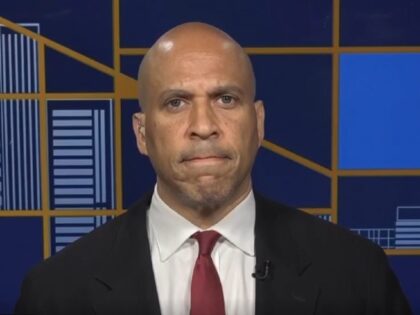
Sen. Cory Booker’s Sunday claim on Meet the Press that unnamed Middle East and NATO allies are privately warning him that President Trump is “a danger to the world” is the latest chapter in a long-running Washington narrative that treats any deviation from endless foreign entanglements as reckless. What Booker is really signaling is discomfort with a commander-in-chief who measures alliances by results rather than blank-check commitments, and that shift has direct consequences for the Second Amendment community. When the United States stops subsidizing other nations’ defense budgets, domestic priorities—including the defense of individual rights—naturally rise in importance, and the same political class that fears a less interventionist foreign policy is the same one that has spent decades trying to restrict the very tools Americans use to secure their own liberty.
The timing is telling: as Trump’s second term emphasizes “peace through strength” without perpetual nation-building, allies accustomed to American underwriting are being asked to carry more of their own load. That recalibration does not make the United States weaker; it makes the global system more realistic and reduces the likelihood that U.S. forces will be drawn into conflicts that have little bearing on American security. For gun owners, the stakes are straightforward—every dollar and every diplomatic hour spent propping up distant regimes is a dollar and an hour not available to push back against domestic gun-control initiatives that rely on the same internationalist arguments Booker now recycles. History shows that when America focuses on its own sovereignty, the political oxygen for schemes like UN small-arms treaties or “common-sense” restrictions imported from abroad tends to evaporate.
Booker’s anonymous sourcing also reveals the deeper game: by framing Trump’s restraint as existential danger, the senator hopes to rally the same coalition that has long linked foreign-policy hawkishness with domestic gun restrictions. The 2A community should recognize the pattern and reject the premise. A president willing to tell allies they must defend themselves is far less likely to tell Americans they cannot defend themselves, and that alignment of interests is exactly what the Founders intended when they placed the right to keep and bear arms at the core of American independence.


