

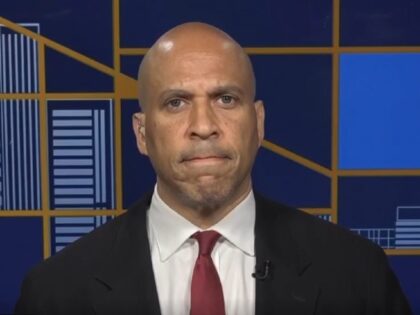
Sen. Cory Booker’s confident prediction of mounting GOP resistance to President Trump’s agenda is less a revelation about legislative gridlock and more a window into how the anti-gun coalition plans to weaponize any internal Republican friction. By framing Trump’s priorities as inherently divisive, Booker is telegraphing that Democrats will treat even modest pro-2A measures—national reciprocity, suppressor reform, or ATF restraint—as opportunities to peel off enough GOP votes to stall or dilute them. The strategy is familiar: portray every firearms freedom bill as an “extreme” Trump initiative so wavering Republicans can claim they’re merely opposing the president rather than the Second Amendment itself.
For the 2A community the real takeaway is that unified Republican control is the only reliable firewall against renewed federal restrictions. Historical patterns show that when GOP majorities fracture, gun-control riders suddenly find enough crossover support to advance—recall the post-Parkland bump-stock ban that sailed through a Republican House. Booker’s rhetoric is therefore an invitation for gun owners to apply maximum pressure on wavering senators and representatives, reminding them that primary challenges and grassroots turnout remain potent antidotes to Beltway deal-making.
The broader implication is that 2026 midterms and state-level races will be fought not only on taxes and spending but on whether the Republican Party still views the right to keep and bear arms as non-negotiable. If intra-party opposition materializes as Booker hopes, the firearms community will need to treat every Republican who cites “Trump fatigue” as a potential vector for new regulations, making electoral accountability the most effective check on both Democratic ambitions and Republican hesitation.


