

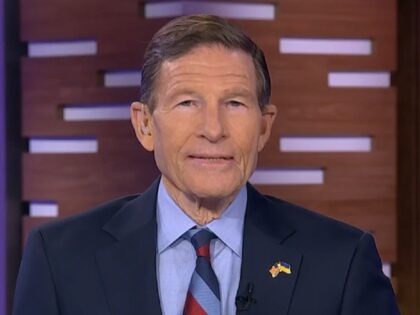
Sen. Richard Blumenthal’s claim that federal agents at polling places represent “Trump’s agenda for voter suppression” is the kind of rhetorical sleight-of-hand that collapses under even modest scrutiny. The senator is conflating routine law-enforcement presence—already authorized under existing federal statutes—with some novel scheme to intimidate voters, when in reality the administration’s stated goal is to deter the very fraud and intimidation that historically suppresses turnout in Democrat-run cities. For the 2A community, the irony is rich: the same voices that reflexively label any armed federal presence at an election site as “suppression” have spent years pushing to disarm law-abiding citizens while simultaneously demanding that only government agents be trusted with security. If the presence of trained federal personnel is now portrayed as an existential threat to democracy, one has to ask why the same standard is never applied to the armed private security that routinely protects Democratic fundraisers and urban polling operations.
The deeper implication for gun owners is that this framing is part of a broader pattern in which any assertion of federal authority that does not advance progressive policy goals is reflexively branded authoritarian. Blumenthal’s rhetoric conveniently ignores that federal election law already permits U.S. marshals and DOJ personnel to observe and, when necessary, intervene at polling places when credible threats of violence or fraud exist. What the senator appears to oppose is not the principle of federal oversight, but the possibility that such oversight might be applied evenly rather than selectively. For Second Amendment advocates, the lesson is clear: if armed federal agents can be painted as voter-suppressors simply for showing up, then the same rhetorical machinery can—and will—be turned against private citizens who lawfully carry at or near polling locations under state constitutional carry or permitless-carry statutes. The 2A community should therefore treat this episode as an early warning that the next battle over election integrity will likely be fought not only at the ballot box, but also in the courts and state legislatures over who is permitted to be armed when democracy is supposedly most at risk.


