

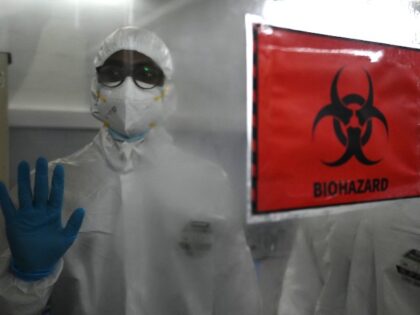
Stanford’s AI-designed viruses are being sold as a medical breakthrough, but the real story is how quickly synthetic biology is outrunning the safeguards that once kept dangerous pathogens locked behind institutional walls. The researchers claim their 16 lab-made viruses will help fight antibiotic-resistant bacteria, yet the same tools that can generate therapeutic phages can also generate weaponized agents with far less oversight than traditional bioweapons programs ever required. For the 2A community this matters because the same regulatory logic now being floated for “AI-assisted biology” will inevitably be aimed at software, 3D-printed components, and eventually the firearms themselves—any technology that can be “misused” becomes a candidate for preemptive restriction.
The deeper issue is the asymmetry of control. A university lab with federal funding can openly publish methods for creating novel viruses, while law-abiding citizens who want to 3D-print a legal firearm component or train with an AR-15 are treated as inherent risks. If the response to Stanford’s work is new layers of surveillance, licensing, or international treaties on “dual-use” AI, those rules will not be written by the people who actually understand the technology; they will be written by the same permanent bureaucracy that already views the Second Amendment as an annoying legacy code to be interpreted out of existence. The 2A community’s job is to recognize that every new category of restricted knowledge—whether it’s certain viruses, certain software, or certain mechanical designs—shrinks the zone in which free people can defend themselves without begging permission first.
What Stanford has demonstrated is not just a medical tool but a proof-of-concept that dangerous capabilities can be generated by algorithms rather than state programs. That shifts the Overton window: once the capability exists in open research, the argument for civilian access to defensive technologies becomes stronger, not weaker. The same decentralized, permissionless innovation that lets individuals build and secure their own networks, encryption, and firearms is the only realistic counterweight to a future where a handful of institutions decide which risks the public is allowed to understand and mitigate.


