

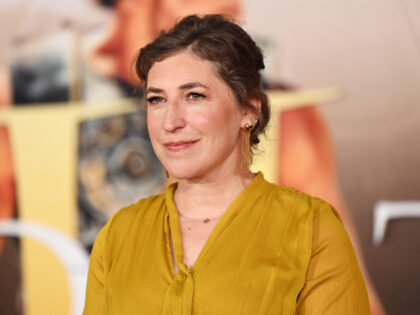
Mayim Bialik’s admission that she felt “unsafe” simply for questioning school and church closures during the pandemic is a stark reminder of how quickly dissent gets branded as danger in today’s cultural climate. The actress, best known for her role on The Big Bang Theory, described the backlash she received for suggesting that prolonged lockdowns might do more harm than good—especially to children robbed of in-person education and communities denied the ability to worship together. What stands out is not just the content of her critique, but the fact that merely voicing it triggered social and professional pressure intense enough to make her feel physically threatened. That dynamic should alarm anyone who values open debate, because when policy questions are treated as existential threats, the same machinery of cancellation can be—and has been—turned on any issue that challenges the prevailing narrative.
For the Second Amendment community, the episode is a cautionary tale about the speed with which governments and institutions can strip away fundamental liberties under the banner of public safety. During the same period that schools and churches were shuttered, many states and cities declared gun stores “non-essential” and ordered them closed, effectively suspending the constitutional right to keep and bear arms for law-abiding citizens who suddenly found themselves unable to purchase firearms or ammunition. The justification was identical: an emergency justified extraordinary restrictions. Yet history shows these temporary measures rarely shrink back to their original scope once the crisis passes; instead, they normalize the idea that constitutional protections are privileges that can be dialed up or down by officials. Bialik’s experience illustrates how social and institutional intolerance for dissent can reinforce that normalization, making it harder for citizens to push back when the next emergency is declared.
The larger implication is that a culture unwilling to tolerate questions about lockdowns is unlikely to tolerate questions about gun control either. When disagreement itself is framed as a safety threat, the policy response tends to be preemptive restriction rather than evidence-based debate. That is why the 2A community must treat every instance of viewpoint suppression—whether aimed at pandemic policy, religious liberty, or self-defense—as part of the same continuum. If citizens can be made to feel “unsafe” for asking whether children should be in classrooms, they can just as easily be made to feel unsafe for asking why law-abiding adults should be disarmed. The defense of the Second Amendment, therefore, is inseparable from the defense of open inquiry; both rest on the same principle that individual rights are not subject to the prevailing mood of the moment.


