

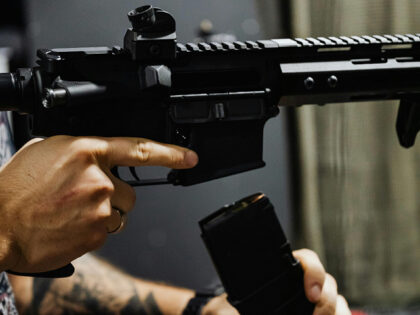
The U.S. Virgin Islands just became the latest laboratory for the gun-control movement’s favorite experiment: strip away the most popular rifle platform in America, outlaw devices that make shooting safer for everyone’s hearing, and cap magazines at a number that forces law-abiding citizens to reload mid-fight. The bill’s sponsors framed it as “common-sense,” yet the data from states that already tried similar restrictions shows no measurable drop in violent crime while lawful owners scramble to comply or move their property off-island. For the 2A community this is less about the Virgin Islands’ tiny population and more about the precedent; if a territorial legislature can redefine an entire class of constitutionally protected arms as contraband overnight, the same logic can be imported to any statehouse that flips blue.
What makes the measure especially galling is the inclusion of suppressors—devices that reduce noise and recoil without affecting lethality—on the same chopping block as so-called “assault weapons.” Suppressors enjoy broad support even among non-gun owners because they protect hearing and reduce the chance that a defensive shot will deafen the homeowner or alert every neighbor within earshot. Pairing them with magazine limits and AR-15 bans reveals the legislation’s true target: not crime, but the normalization of effective self-defense tools. The 2A community should watch the governor’s signature closely; if it lands, expect copy-cat bills in other jurisdictions and a fresh round of litigation testing whether the Supreme Court’s Bruen framework will finally put an end to these performative restrictions.


