

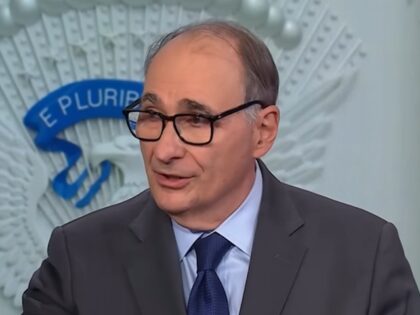
David Axelrod’s latest CNN sermon—that Donald Trump’s warnings about rigged elections amount to a “sin on our country”—lands with the same tinny ring as every other Beltway talking head who suddenly discovers civic virtue only when the wrong side questions the machinery. The former Obama consigliere spent eight years inside an administration that weaponized federal agencies against political opponents, yet now treats any skepticism about mail-in ballots, unsecured drop boxes, and last-minute rule changes as existential blasphemy. For the 2A community the message is unmistakable: the same institutional reflexes that label election-integrity concerns as “sin” are the reflexes that label an AR-15 purchase or a standard-capacity magazine as “assault.” When the referee keeps moving the goalposts, the players rightly start asking who owns the scoreboard.
The deeper implication is that once the administrative state decides certain questions are beyond debate, every tool of coercion—regulatory, financial, and eventually kinetic—becomes fair game to enforce that consensus. Gun owners watched this script play out in real time during the pandemic when ATF “guidance” letters morphed into felony reinterpretations overnight and when states used emergency powers to shutter gun stores while liquor stores stayed open. Axelrod’s rhetoric simply telegraphs the next phase: if questioning vote tabulation is already a secular sin, then questioning magazine bans or pistol braces will soon be framed as an attack on “our democracy” itself. The 2A community’s only durable defense is the same one the Founders relied on—an armed, informed populace that refuses to outsource its skepticism to whichever party currently holds the megaphone.
What Axelrod and his media chorus never address is the empirical reality that trust in elections and trust in the Second Amendment spring from the same source: verifiable processes and transparent rules. When those processes are opaque, citizens arm themselves not out of paranoia but out of prudent self-reliance—the very impulse the Constitution was written to protect.


