

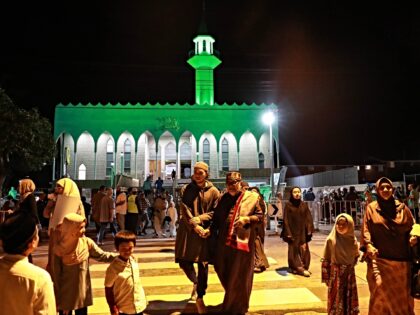
In a move that quietly underscores the friction between imported religious practices and long-standing Western norms, a local Australian council has rejected the Islamic Council of Victoria’s bid to pipe the adhan across suburban streets five times a day. The decision, framed as a noise-control issue, nevertheless signals that elected officials are still willing to draw a line when a minority practice collides with the expectations of the broader community. For American gun owners watching from afar, the episode is a reminder that cultural self-assertion is not an unstoppable tide; pushback is possible when citizens insist that public space remain common ground rather than contested territory.
The deeper lesson for the 2A community lies in the mechanics of that pushback. Australia’s strict firearm laws were sold to the public as a narrow, “common-sense” measure aimed at “military-style” weapons; within a generation the same regulatory logic expanded to pump-action shotguns, lever-actions, and even certain air rifles. Likewise, what begins as a polite request for amplified prayer can evolve—absent vigilant scrutiny—into normalized claims on the soundscape, the calendar, and eventually the legal code itself. Gun owners who treat every encroachment on the right to keep and bear arms as an isolated event make the same strategic mistake: they ignore the cumulative effect of small concessions until the culture itself has shifted.
What the Victorian episode ultimately illustrates is that rights are preserved less by last-ditch court fights than by communities willing to say “no” early and often. Whether the issue is loudspeaker volume or magazine capacity, the principle is identical: sovereignty over one’s public square and sovereignty over one’s firearm both rest on the same foundation—the people’s refusal to outsource their cultural and constitutional inheritance to the loudest petitioner.


