

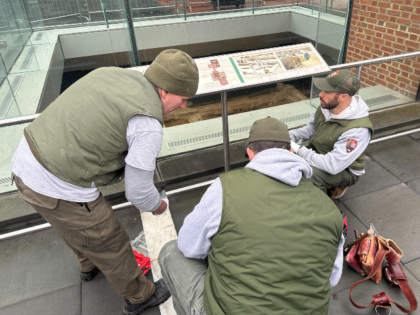
In a ruling that underscores how historical interpretation has become a political battleground, the Third Circuit Court of Appeals cleared the way for the Trump administration to restore interpretive panels at Philadelphia’s President’s House site—panels that critics had labeled insensitive for acknowledging the presence of enslaved people who served the nation’s first presidents. The decision is less about slavery exhibits themselves and more about who gets to decide what the public sees at federally controlled historic properties: career bureaucrats and activist historians, or elected administrations accountable to voters. For the firearms community, the parallel is obvious; the same administrative state that tried to memory-hole uncomfortable facts about America’s founding is the one that now claims sole authority to reinterpret the Second Amendment through ever-shifting “sensitive places” rules and magazine bans dressed up as public-safety measures.
The deeper implication is that control of the narrative is a form of disarmament. When government historians are permitted to scrub references to the armed citizenry that secured independence, or to downplay the role of privately owned muskets and pistols in both the Revolution and the defense of freedmen during Reconstruction, they are shaping the cultural soil in which future gun-control arguments will grow. Restoring the panels is therefore not merely a curatorial victory; it is a small but concrete check on the administrative state’s ability to curate history in service of contemporary policy goals. If the courts can protect an exhibit acknowledging that George Washington’s household included enslaved people who lived under the same roof as armed guards, they can also be pressed to protect the historical record showing that the right to keep and bear arms was understood as an individual, pre-political liberty—not a privilege doled out by the very agencies now rewriting the past.


