

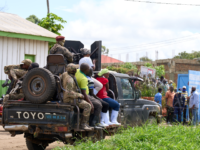
In the Democratic Republic of Congo, where armed mobs are now storming Ebola treatment centers and driving out the very medical teams trying to contain a disease that has already sickened more than nine hundred people, the collapse of basic order is once again laid bare. When governments cannot—or will not—protect clinics, roads, or villages, citizens are left to improvise their own security, and that improvisation almost always begins with privately held firearms. The footage of angry crowds overwhelming under-guarded facilities is a stark reminder that disease control is impossible without physical security, and physical security in the absence of reliable state protection defaults to the individual right to keep and bear arms.
For the American 2A community the lesson is not abstract. Every breakdown of civil authority, whether in West Africa or closer to home during urban riots, demonstrates that law-abiding citizens who can lawfully carry defensive firearms become the last line between order and chaos. Congo’s militias and mobs operate with near impunity precisely because the population has been disarmed by decades of colonial and post-colonial gun bans; the result is not safety but predation. By contrast, shall-issue carry laws and constitutional-carry expansions in the United States have repeatedly shown that armed citizens deter—not invite—violence, a fact public-health officials quietly rely upon when they ask hospitals to allow off-duty officers or permitted staff to carry inside treatment wards.
The deeper implication is that any future pandemic response plan drafted without recognizing the Second Amendment as an essential layer of civil defense is dangerously incomplete. From supply-chain escorts to the protection of vaccine distribution points, firearms in trained hands will determine whether medical infrastructure survives the next outbreak or is overrun like the clinics in Congo. The right to bear arms is therefore not a cultural preference; it is a practical prerequisite for resilient public health in any society that values keeping its people alive when the sirens stop.


