

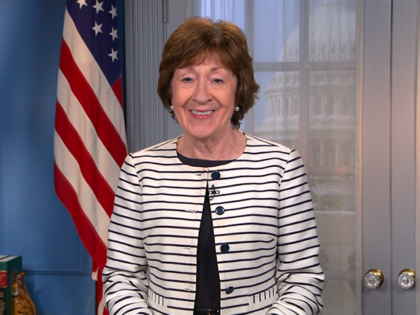
In a time when national pride often feels like a relic of simpler days, Sen. Susan Collins’ invocation of “America the Beautiful” as more than scenic poetry lands with quiet but deliberate force. By framing the anthem as a living testament to the American spirit rather than mere landscape appreciation, Collins reminds listeners that the country’s strength has always resided in its people—the same people who, generation after generation, have shouldered the responsibility of self-defense. For the 2A community, this is more than ceremonial language; it is a subtle but unmistakable nod to the idea that liberty is not preserved by geography or government decree alone, but by citizens willing to defend it.
The timing of her remarks, delivered ahead of the nation’s 250th birthday, carries added weight. As cultural debates over the Second Amendment intensify and some political voices treat the right to keep and bear arms as an embarrassing anachronism, Collins’ emphasis on the enduring character of the American people serves as a counter-narrative. It suggests that the same spirit celebrated in song—the resilience, independence, and moral clarity that built the republic—remains essential to its preservation. In practical terms, that spirit manifests today in millions of law-abiding gun owners who view their firearms not as symbols of aggression but as instruments of responsibility, echoing the founding generation’s understanding that a free people must remain armed.
For Second Amendment advocates, the real implication lies in what Collins left unsaid yet clearly implied: the American experiment succeeds only when its citizens retain both the moral framework and the practical means to protect it. As the country approaches its semiquincentennial, her prayer that “God will continue to shed His grace” on the nation doubles as a reminder that grace without vigilance is fragile. The 2A community, long accustomed to defending its rights against incremental erosion, recognizes this as both encouragement and challenge—proof that cultural affirmations of American character still carry weight, and that the defense of those rights remains a living duty rather than a historical footnote.


