

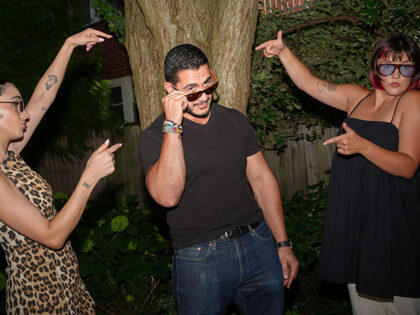
Abdul El-Sayed’s decision to close his Michigan Senate campaign at a Detroit pool party headlined by Hasan Piker is more than a quirky footnote—it’s a window into the coalition he hoped would carry him to Washington. Piker’s brand of online socialism has long treated the Second Amendment as a relic of “settler-colonial” violence, arguing that private gun ownership is incompatible with progressive governance. By sharing the stage with him, El-Sayed signaled that his own gun-control agenda—universal background checks, red-flag laws, and an assault-weapons ban—would be advanced not by rural sportsmen or even suburban moderates, but by a digital left that views the right to keep and bear arms as inherently suspect. For Second Amendment supporters, the optics are clarifying: the candidate who once touted his medical credentials as proof of “pragmatism” chose to end his run in the company of an influencer who openly mocks lawful gun owners as cosplay commandos.
The timing matters, too. Michigan’s Democratic primary electorate is still digesting last year’s Oxford High School tragedy and the resulting push for safe-storage mandates and magazine restrictions. El-Sayed’s pool-party finale suggests he believed the path to victory ran through Gen-Z activists and content creators rather than the union households and Black churchgoers who traditionally decide Democratic primaries in the state. That bet appears to have failed, but the larger lesson remains: when a candidate’s final public act is a social-media spectacle that sidelines hunters, competitive shooters, and the small-business owners who populate Michigan’s gun shows, it telegraphs whose priorities will dominate if similar candidates ever win statewide. For the 2A community, the episode is a reminder that cultural signaling often precedes policy, and that the next restrictive bill may well be workshopped not in Lansing hearing rooms but in the comments section of a Twitch stream.


