

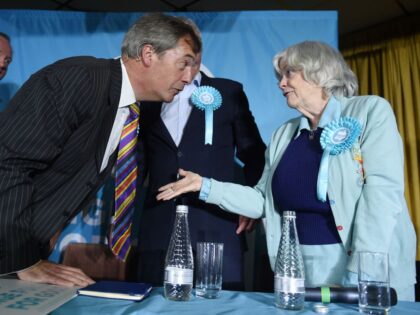
Ann Widdecombe’s passing at 78 closes the chapter on one of Britain’s most unapologetic defenders of individual liberty and national sovereignty, a woman whose career spanned Parliament, the European Parliament, and even the reality-TV spotlight. Farage’s tribute rightly highlights her as a “force of nature,” but the deeper story is how Widdecombe consistently rejected the managerial state’s impulse to disarm citizens under the banner of safety. From her early days as a Home Office minister to her later Brexit Party role, she understood that rights are not gifts from government but bulwarks against it—an insight that resonates far beyond the Channel.
For American Second Amendment advocates, her record offers a cautionary mirror. Widdecombe watched Britain’s post-Dunblane handgun ban and the steady tightening of shotgun certificates turn lawful owners into administrative suspects; she never bought the narrative that confiscation equals security. Instead, she argued that a disarmed populace invites both criminal predation and state overreach, a view that aligns with the Founders’ warning that the right to keep and bear arms is the ultimate check on tyranny. Her willingness to say so in a country where such talk is politically radioactive made her an outlier worth studying.
The implications for today’s 2A community are straightforward: cultural and political erosion of self-defense rights rarely arrives in one dramatic stroke; it creeps through licensing schemes, “common-sense” restrictions, and elite disdain for rural or working-class gun culture. Widdecombe’s career shows that pushing back requires figures willing to absorb media scorn and still speak plainly about sovereignty—personal and national. Her death is a reminder that the defense of the right to arms, like the defense of Brexit, ultimately rests on citizens who refuse to outsource their security or their freedom to distant bureaucracies.


