

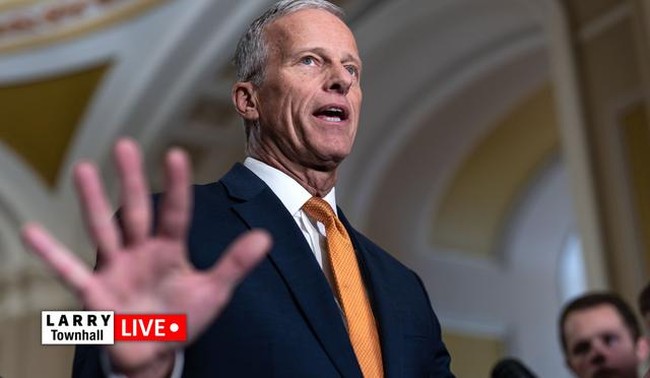
President Trump’s decision to publicly pressure Senate Majority Leader John Thune into advancing the SAVE Act is more than a procedural skirmish—it’s a calculated reminder that the incoming administration intends to treat election-integrity legislation as non-negotiable. By forcing Thune’s hand before the new Congress even convenes, Trump is signaling that any senator who drags their feet on voter-ID and citizenship-verification measures will face the same grassroots heat that toppled previous leadership obstacles. For the firearms community this matters because the same databases and verification standards used to secure elections are the infrastructure needed to keep prohibited persons—felons, domestic-violence offenders, and illegal aliens—out of the NICS system; weak verification at the ballot box inevitably bleeds into weak verification at the gun counter.
The ripple effects extend beyond one bill. When the White House elevates an issue this early, committee assignments, amendment strategy, and even appropriations riders begin to orbit around it. Expect pro-2A lawmakers to attach reciprocity or suppressor reforms to must-pass election packages, betting that leadership will rather swallow a gun-friendly provision than risk another Trump-led primary challenge. Meanwhile, the same institutional media that spent years framing voter-ID laws as “voter suppression” are already previewing identical attacks on expanded background checks—giving Second Amendment advocates a ready-made contrast: if photo ID is racist at the polls, why is it suddenly enlightened at a gun store?
Ultimately, the episode underscores a broader realignment. Trump has shown he can move the Senate without holding the gavel; that precedent will be watched closely by gun owners who remember how quickly post-2020 GOP leaders abandoned campus-carry and national reciprocity once the cameras left. If Thune folds quickly, it strengthens the hand of senators willing to pair election security with Second Amendment priorities. If he resists, the 2026 midterms will become a de-facto referendum on whether the upper chamber still answers to the base that actually buys the ammunition and casts the ballots.


