

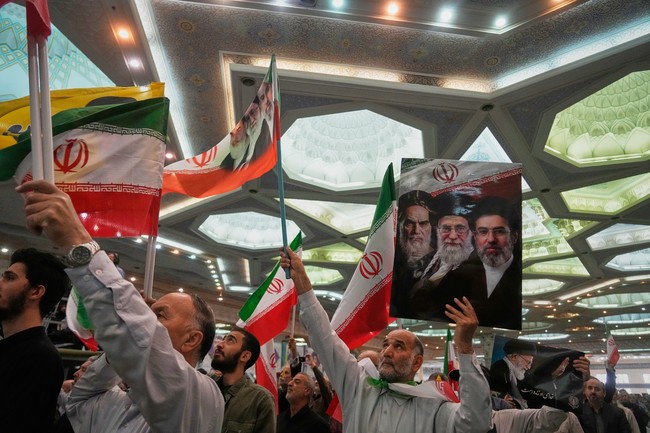
Iran’s sudden leadership shake-up isn’t just another headline from the Middle East—it’s a flashing red light for anyone who values an armed citizenry as the ultimate check on centralized power. President Pezeshkian’s resignation, framed as a protest against the Islamic Revolutionary Guard Corps’ tightening grip, reveals how quickly a professional military force can eclipse civilian institutions when the population is disarmed and dependent on the state for protection. In a country where private firearm ownership is virtually nonexistent and heavily criminalized, ordinary Iranians now watch their government morph into an outright praetorian regime with no practical means to push back.
For American gun owners, the lesson is immediate and sobering. The same arguments we hear at home—that “only the government needs guns” or that “assault weapons have no place in civilian hands”—mirror the logic that left Iranians defenseless against the IRGC’s ascendancy. History shows that once a single, ideologically driven security apparatus monopolizes force, constitutional niceties evaporate; rights become privileges doled out by whoever holds the bigger stick. The 2A community has long warned that the Second Amendment isn’t about hunting or sport, but about preserving a distributed balance of power that makes coups and strongman takeovers prohibitively expensive.
What happens next in Tehran will test whether a disarmed society can claw back any leverage at all. If the IRGC entrenches itself further, expect show trials, media purges, and accelerated nuclear posturing—all delivered by a force that answers to no electorate. Meanwhile, here at home, every new restriction on semi-automatic rifles or magazine capacity inches us closer to the same imbalance. The Iranian example isn’t theoretical; it’s a live demonstration that rights reduced to paper mean nothing when the citizenry cannot physically deter those who would rule by force alone.


