

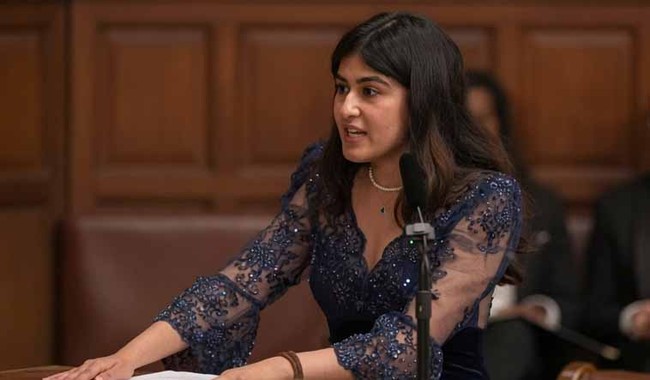
The Oxford Union president’s thinly veiled threat to Islam critics—that without security they’d be “cooked” by a mob—lays bare the raw power dynamics that free-speech absolutists have long warned about. When the leader of one of the world’s most prestigious debating societies openly concedes that dissenters need armed protection to survive a discussion, the conversation has already left the realm of ideas and entered the realm of force. For Second Amendment advocates, the episode is a textbook illustration of why the right to keep and bear arms isn’t a hobbyist’s privilege but the practical guarantor that unpopular speech can still be uttered in public.
What makes the remark especially galling is its casual acceptance that private citizens must rely on state-provided muscle rather than their own means of self-defense. In Britain, where handgun ownership is virtually prohibited and even pepper spray can land you in jail, the state’s “protection” is both selective and slow. The Union president’s warning therefore doubles as an admission: the government cannot—or will not—secure every venue where contested ideas are aired. That vacuum is precisely where the American constitutional design steps in, recognizing that the individual is the first responder when seconds count and the authorities are minutes away.
For the 2A community, the takeaway is straightforward: the same cultural currents that normalize “safety” rhetoric to disarm law-abiding citizens are the currents that empower mobs to punish dissent. Oxford’s episode is a cautionary tale from a country further down the disarmament road; it shows what happens when the right to effective self-defense is treated as optional rather than foundational. The lesson for Americans is to treat every incremental restriction on the right to bear arms not as a discrete policy tweak, but as another brick removed from the wall that separates open debate from enforced silence.


