

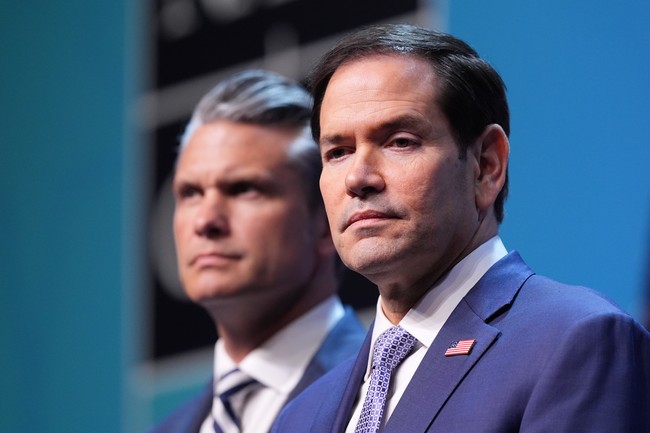
Marco Rubio’s fingerprints are all over the next chapter in Venezuela, and the way that chapter unfolds will either cement him as a serious foreign-policy heavyweight or leave him as just another senator who talked a good game. After years of sanctions, asset freezes, and quiet diplomacy aimed at prying Nicolás Maduro loose, Rubio now sits at the intersection of reconstruction financing, energy-sector reopening, and the inevitable question of who gets to sell what to a country that has been starved of legitimate commerce. For the firearms community the stakes are straightforward: a post-Maduro Venezuela that re-enters the global economy under rules-based governance could become a legitimate market for U.S. sporting arms, optics, and ammunition once again; a Venezuela that slides back into authoritarian control or Chinese client-state status will lock that market away and hand another foothold to actors who view the Second Amendment as a threat rather than a right.
The deeper implication is how Rubio’s Venezuela playbook might travel. If he can demonstrate that targeted sanctions plus credible reconstruction incentives can flip a failing petro-state without boots on the ground, the same template could be applied to other hemispheric trouble spots where narco-trafficking and gun-running thrive. That matters to 2A advocates because every stable, rules-based neighbor reduces the flow of smuggled firearms and cartel cash that eventually finds its way north. Conversely, if the effort collapses into another round of expropriations and black-market economics, expect the same illicit networks that already move AKs and 7.62×39 through the Darién Gap to grow stronger, not weaker.
Ultimately, Rubio’s legacy will be measured less by press-conference optics and more by whether Venezuela’s eventual recovery includes a legal, transparent firearms market that respects individual rights and shuts out the cartels. If he pulls that off, the 2A community gains both a new export destination and a working model for how American pressure can produce freer societies instead of perpetual conflict zones. If he doesn’t, the lesson will be that sanctions without follow-through simply hand more territory to the very forces that profit from keeping civilians disarmed and dependent.


